
Blog 4: International Women’s Week

The presentation that I attended was called, “Art in Response to Backlash”: a presentation by Sonya Stefan. Sonya Stefan is a media artist that aims to create work using real-time electronic glitchery and she is very interested in the deterioration of objects. She uses damaged materials and transforms them into contemporary new media works. Sonya Stefan is the curator at Lux Magna, Pop Montreal and Suoni Per II Popolo. She is the cofounder of La Lumiere Collective and Ibrida Pluri. She is full of adventures and is a very hard worker. Apart from collaborating with many artists, Stefan is a professional dancer and she performs with Animals of Distinction, Estelle Clareton, The Toronto Dance Theatre, etc. She also enjoys filmmaking and has proven to be a very successful filmmaker. While filming, she focuses on single framed works, insolation, music and DIY (Do it yourself) films.

The key message that Sonya Stefan conveyed during her presentation is to have courage to not be afraid to push the boundaries and to think outside the box. She taught us that weird is cool and that normal is boring. She also spoke to us about collaboration and how important it is to work with people that can teach you new things and help you explore new concepts. She enjoys collaborating with musicians because she knows little about music and they teach her how to mix music with filmmaking. She also loves including children in her events and festivals because she loves when families are brought together. She has children of her own and realized that they were not able to attend art events, therefore she began creating events that would allow parents to bring their kids along with them.

During the presentation many students asked her questions about her determination and courage. We were all very inspired by her hard work and dedication. I would recommend this presentation to others because of the will power that was shown through the eyes of Sonya Stefan. She has proven that anything is possible and that if you set the right goals, you will be able to achieve them and leave a print on the world. She has participated in so many events and has changed the lives of many people including filmmakers, musicians and families. Before this event, I did not know much about filmmaking or any of the events that Sonya Stefan spoke about during her presentation. She opened my eyes to many things that are happening here in my own city that I did not even know about. She made me think about the different activities that are currently going on that can help others find their right path. Sonya Stefan is a very powerful woman that has paved the way for many artists and it is thanks to people like her that the art industry continues to grow and leave a mark on our society.
Blog 4

Jacky Vallée gave an amazing presentation about some misconceptions on evolution. There was debunking of certain arguments that we use to justify some power roles enforced with gender. These claims are sometimes used to justify a certain “human nature” such as men being the dominant ones in a couple or women are just here to procreate. These claims are usually enforced by a cultural narrative, one we twist to our liking. 

The first argument people pitch into arguments about human nature is that “all societies have been dominated by men since the beginning of time”. So men would just be more competent at leadership. There’s this ideology behind that its adaptive for men to be more aggressive and dominant while women should be passive and dependent. Why do we need to question this kind of thinking? Because we don’t feel the need to question whether it’s true or not; we seem to just accept it since it’s usually at the back of our heads.  Truthfully, these misconceptions about these prehistoric people might have stemmed from the images we portray of human evolution. It’s always the man growing into a human. In a way, these images then reflect common social attitudes like men are stronger or innovators and women are supposed to be sexy and for the male gaze. I found this especially important to mention because it’s a metanarrative we just naturally and widely accept about why things are the way they are. 

Another misconception is that the man is the mighty hunter, and the female just gatherers the smaller game and plants. The problem with this thinking is that it doesn’t take in consideration the much more complex issue there was back in those prehistoric days. This glorification of the man for facing the bigger danger of getting meat has false origins. Meanwhile, the women did the “safe” work near the homes and just waited for the meat to come back. These ideas are based on 20th century middle class standards; the anthropological data shows much more complex scavenging. Humans rarely hunted and rather obtained their meat through shaving. Although men did contribute with some meat, we can’t just undermine the women contributing with a higher %of caloric intake from plant foods, small animals and fish. 

On another note, the idea that man is the innovator and the smart ones, and the women are just left waiting for them is not based on anything either. Through anthropological data, it was found that the first tools we made of perishable materials like wood or bones. The first containers were most likely containers as well. And if you think about it, there’s no way of knowing who made those tools in the first place. Interestingly enough, one of our closest relatives, chimps, mostly have the females teach. The mothers would use rocks to open nuts and then teach it to the younglings. So really, there is no proof that men were the first tool makers. 

So why is all of this important? To demonstrate that cooperation has always been the key element to the survival of offsprings and it’s not about who is the strongest or most dominant. Everyone played a role. Western societies just portray women as sexually and socially passive and men as aggressive leaders who are smarter and better. So maybe we should recheck what we value in our society and what images we have of the genders. 

Blog 4.5 – International Women’s Week

The event I chose to go to is the Slav & Kanata Debacle. It was presented by two women who fought against Robert Lepage when he tried to put on two different plays, Slav & Kanata, about cultures he is no part of – and clearly know nothing about. Those two women were Nakuset, a Cree woman who participated in a meeting with Lepage to criticize his attempt at the representation of Aboriginal communities in his play, and Elena Stoodley, a woman working in the theatre industry who helped revise Lepage’s show on black slavery. The key message of their discussion was that white men hold most of the power in society and that it requires a lot of talking, convincing and arguing to change their minds and to pass on to important messages. They both, in the name of their people, took a stand against the propagation of false information and for their right to be able to tell their own story the way it should be told.

           Most students in the audience seemed to enjoy the talk and to relate to it in some way. Some of them asked questions about the speakers’ feelings relating to their specific fight against Lepage, and I remember one of them asking what they thought the limits of artistic freedom should be since that’s the main argument Robert Lepage used against their criticism. What struck me the most, however, was that barely anyone had heard about both those stories before. Even if Nakuset and Elena mutually concluded that mostly the francophone indigenous and black communities responded to Lepage’s work, I was still surprised since these stories attracted a lot of media attention over time. Both this element and the presentation itself made me realize that with all our different backgrounds, sometimes, it is hard to learn about everything that links us and everything that makes us different as humans. The only thing that matters, however, is to own up to the fact that we are not all-knowing creatures and that it is fine not to know a lot about some subjects. The first step towards that acceptance, in the case of Quebec, should be for the province to let go of their embarrassment about colonialism and to own up to what they did.

Indeed, other situations as such could happen, and men’s envy to show off their knowledge – and ‘’artistic freedom’’ – could eventually change the narrative about what is to be known about cultural matters that are not theirs to talk about. If we stop teaching kids that black culture started existing with slavery and that our relationships with Indigenous communities were always perfect, maybe fewer individuals would be biased and more would develop more meaningful respect and an interest in those cultures. To do so, we have to put them and their stories at a more critical level because, just like Elena Stoodley said: ‘’there is never appreciation when there is no equality’’ and their cultures deserve the same respect as the Western one.

Blog 4(part 2)Women’s week

This week I attended a presentation called “(Re)imagining Gender and Sexuality in the healthcare Field through Ancestral Inquiry. The presenters name is Emil Briones is a successful person who teaches at McGill University. He talks about the course he teaches to dentistry students, which includes gender identity, gender expression, biological sex and sexual orientation. He mentions that his students sometimes find it difficult to understand these topics as they are usually concerned with the scientific fact of people. What he answers to that, which is important, is how sometimes even if you can’t see it with science it doesn’t mean it doesn’t exist. Another important point made is that one must look into his own roots of where one came from. He meant that you must look back at your own culture to have a better understanding of one’s self. He then continued in talking about two spirited people, which is someone who has both the male and female identities in one body. As he mentions that they are healthcare healers and spiritual healers, showing that there are many other ways to help people. He ends by explaining that anyone who’s profession involves helping people must understand that in order to understand a patient’s needs, one must understand their culture.

After talking to other students, they agreed that it is important to consider other ways of explaining thing in only the scientific way. Along with it is important to know your own culture along with others so you can better understand people.

From what he said, I do agree that somethings can’t only be explained by science and one must have an opened mind to things. With that said I do find it important to look at one’s culture to get to know more about yourself. For example, in my personal life, to have a better understanding of my own culture I travel to the country that my mother came from and learnt a lot from my grandmother, which I found very useful to know.  With that being said I strongly believe that in order to actually understand someone even as a friend you must have a sense of what their culture is about. This can help you understand why and how they think or even do certain things.

After researching Emil Briones, I found out that he is also very talented. As he is a researcher, writer, musician and he is also an educator in Tiohtià:ke. He is vey talented in many aspects in life along with being an educator at McGill University as mentioned.

After listening to this presentation, I would recommend it to my friends because it talks mainly about having an opened mind to things. Which is something that is important to have along with the fact that one must research about their own culture while getting to know other cultures as well, so one can have a better understanding of our multicultural society.

Blog 4: International Women’s Week at Vanier

Briana Panaccione

On February 6th 2020, I attended an assembly called “Appropriate This!: The Slav & Kanata Debacles.” It spoke about a man named Robert Lepage who was making documentaries based on false historical background. Robert Lepage is a “Canadian writer, director, designer, and actor known for his highly original stage and film productions.” The Panel discussions spoke of two of his cultural plays; one called Slav that was about African American history and the other called Kanata about First Nation history.

The two speakers shared their unappreciated experience with Robert Lepage. For both of his plays, he demonstrated both cultures stories falsely and each of his plays didn’t even include African American or Indiginous actors. When he was confronted about his cultural appropriations, he reasoned by saying that his films are “artistical” and he can portray them as he wants. The issue here is that indigenous and African American people have been mainly excluded from society and they have a lot of background and sentimental information about their story. If their story is to be told, it should be told in the most honest and truthful way and it should be demonstrated by people of that culture. It is their experience, their history and their story to tell.

When I spoke to other students, they expressed the same feelings of injustice as everyone else. It isn’t fair or right that this man could portray a play with such false background and even after being approached about the situation, still neglect their opinions.

There have been many articles written about these plays; it stirred up a lot of tension from people defending the representation of their culture.

Here a article speak about both the Kanata play and Slav play, it quotes: “Another one of Quebec director Robert Lepage’s productions is mired in controversy, following an uproar over SLĀV, his show about black spiritual slave songs sung by a mostly white cast and headlining Betty Bonifassi, a white singer, that was cancelled by the Montreal International Jazz Festival after a few performances.

Lepage’s upcoming show Kanata, about Indigenous people, once again without any real representation or artistic input from the very communities it is about, prompted 20 Indigenous artists and activists to write a letter that was published in Le Devoir.”

I enjoyed listening to this speech because I wasn’t aware of this issue and I hope Robert Lepage becomes wiser regarding the issue and doesn’t happen again.

Blog 4

This week I went to two presentations for Women’s week. The first one that I attended was on “The Importance of Collective Care in the Helping Profession,” presented by Anuska Martins. She discussed the serious topic of Intimate Partner Violence (IPV) and what she does in order to help women that are victim to this type of abuse. There are so many types of IPV and it can sometimes be hard for you to realize you are being victimized or you also might be in denial.Situations like these usually start of like normal relationships but then slowly tension starts to build and then one day your partner just snaps. Sometimes the love is so strong between the two people that the abusee often goes back to their abuser. When the women realize that things are wrong there are places that they can go to for help.  

The woman that was speaking works at a shelter that looks like a big house so that it blends in with the other homes and not get any extra attention drawn to it. Nine women can stay at a time for up to three months and are allowed to bring their children. They get support and advice from the professional helpers. The location is confidential so the women don’t have to fear that anyone will find them. 

It was interesting to hear that even though the professional helper’s job is to help the women in need, it sometimes gets too much for them too. They can be so focused on wanting to help the others out that they forget about their own feelings and may start to get burnout. They can start feeling resentful that they help people out with their problems but no one’s there to help them out with their own. 

I always knew domestic abuse was a thing but this event really opened my eyes on what happens behind the scenes. It’s scary to think that someone you love can turn into someone so violent and take over your life and wellbeing. Myself and other people in the crowd definitely enjoyed the presentation but were also shocked on how often and how scary IPV actually happens. It was definitely a learning experience and something I would like to know more about.

The second presentation I went to was the Art in Response to Backlash presented by Sonya Stefan. She showed the crowd many images and videos of the things that she found interesting throughout the duration of her life. She has created clubs like La Lumiere Colllective in which people share films they’ve made to others for a low price, Telepresence is another club where she uses and collects old camera equipment to make mini films, Kids Pop is a service for young kids and Lux Magna where they celebrate culture and art. 

This woman was a dancer and was insecure about her body, she knows that that is a struggle for a lot of women too. Growing up, it was hard for her to like her body and appreciate it but once she turned 35, the expression of art helped her love herself. Dance is an industry where the women had to “shut up and obey” and once she learned that it was actually an artform she began to be the best version of herself as she could. 

Sonya defines feminism as someone who is honest, open and willing to learn, she was born a feminsit and believes she will die as one too.

I enjoyed listening to her speak and I hope to see her again next year.

Bringing light to Disabled Women

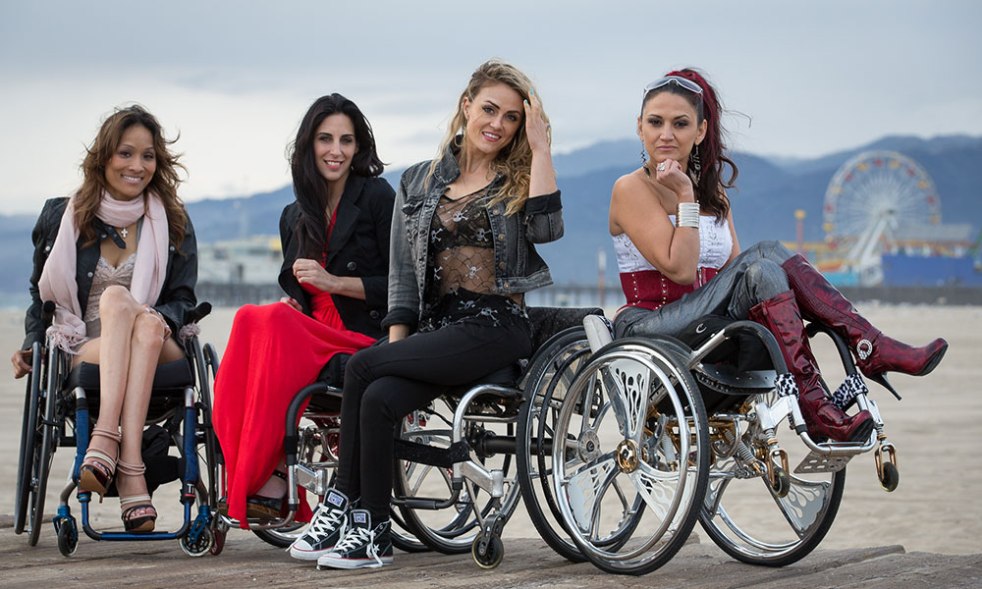
On March 7, I attended “The Disabled Women’s Network: Bringing the Intersection of Gender and Disability to Light”. The speaker was Nelly Bassily. She is the director of DAWN (Disabled Women’s Network) This network focuses on girls and women with disabilities and their rights. Nelly also lives with anxiety, depression, chronic pain and post traumatic symptoms which is why it is important for her to show a light on people who deal with disabilities.

She first started by asking the audience “what first comes in your mind when you hear the word disabled?” At first, the audience did not have much to say, then one guy answered “wheelchair”. When thinking of disability, many think about someone in a wheelchair. The speaker discussed on how a lot of people have ONE image on disabled people. They think “oh this person probably can’t walk”. Nobody ever looks at the mental part of a disability, the physical side is always looked at. Most of the times, mental disabilities don’t even show. This is why we only have one image in our head when we think of disability. The speaker then asked another question “What do you guys feel when you see someone disabled?”. Most students said that they think of someone who needs support from someone else. As the discussion was going on, I started to understand that even I, myself should not have   pity for someone when their disabled. It isn’t right and they don’t always need that extra support just because their disabled.The audience wasn’t as active than I would have thought. It wasn’t a full audience and the same answers were getting repeated, but I still enjoyed the event.

The key message from Nelly was really that women and kids always portrayed in a certain way because they have a disability. Our society has to be aware that these kinds of discrimination are terrible because they give a different image of what is it having a disability.  The event changed my perspective on disabled people and I feel that every student should go to these kind of events to know more about the subject.

Blog 3: Gender Equity in Indigenous Cultures

There was a visible contrast between the European and Indigenous culture when it came to their gender relations. Unlike the Europeans, the indigenous people were matriarchal and lived an egalitarian society meaning everyone had equal rights and opportunities. In the Indigenous culture, everyone has an important role that will in some way benefit their community. While the men do more of the hunting, women make a lot of important decisions-making when it comes to their lives and well-being. They are also more open when it comes intimate relationships before marriage and the term “two-spirit” which is when both genders are in one body. 

            In the European culture, men were seen as always in power while women were looked down upon and considered less important. The men in the women’s lives were always the one to make decisions for them or in general. Regarding marriage, it was not a personal choice people got to make but more of an obligation in society in order to have a status and later on children.

Both of these cultures can relate in some way to our contemporary western culture. The Indigenous culture is similar in the sense that both men and women play an important role in our society when it comes to daily affaires; from job positions, to household responsibility and financial situations. While there has been a vast improvement in our society between men and women, there are still major barriers that we have not overcome which is where our contemporary western culture is also similar to the European culture. Women are still seen as less than men which is a growing issue in our society.

            The aspect of the Indigenous culture that struck me the most was how open they are about their view on lgbtq+ viewpoints in their society and the term of being “two-spirited”. No matter what, everyone in the community is viewed as equals to one another which I believe creates positive environment and should be something we do in our community as well.

Blog 3

At the beginning the author’s opening anecdote was to show the role of women in a specific culture. As people tend to have the idea that women only recently gained power within society, which is true if looking at our specific culture. Which is why the authors point is to demonstrate that women actual had power in the sixteenth century and it was completely normal in the aboriginal society. It also shows how advance their culture was compared to the Europeans, as mentioned, women didn’t have any power, adding to the shock Europeans had when they found out that in that specific period of time women had a great deal of influence over men.

In the aboriginal societies men and women had different roles along with having a better sense of understanding when it came to equality compared to Europeans. Along with that they had a better acceptance about premarital relations and sexual orientation. Taking that into consideration, it is just to say that aboriginal societies where more advanced in their thinking and open minded as people tend to be in today’s day.

In the Innuit society, it would be considered the most related in practice to our modern-day society. As men in women had roles yet they each had their own important roles, but at the end of the day men and women’s decisions and opinions were equality as important. Which can be said about our society, as we tend to still have certain specific roles, although both genders opinions matter when making decisions. The society that tends to be the least related to ours would be the Mi’kmaw, as men would hunt, and women would do the agriculture and take care of the children. Although women had a certain degree of power, the main leaders were men. Which in today’s day, we have a lot more women as leaders.

Two spirited identities we people who had both female and male identities in one body. As if they were men bodied individuals the would wear feminine clothing and vise versa. Along with they had important roles in society, as they were “healers, seers, and bearers of oral tradition.” The difference with two-spirited peoples and the LGBTQ+ is that they held specific ceremonial roles of the two spirited community. While the term can only be used by a first nations person, or else the term wouldn’t make sense.

As mentioned, women in aboriginal societies were more advanced as their opinion and voice mattered in their community compared to the Europeans. As Europeans men had all the power over women, whereas the aboriginals it was either equal power or women’s opinion had a great influence on men.

As colonization progressed, Europeans took more and more land leaving the aboriginals with almost nothing. Along with the abuse brought upon them, from the alcoholism to the kidnapping of their children to attempt to change who they are has had a large impact on aboriginals. To this day the abuse done to them still continues as an example that they’re many of them who still don’t receive clean drinking water. Which is to show how till this day aboriginals are still being negatively affected by colonization.

Blog 2: The Issue of Beauty Standards

In today’s society, the idea of beauty has been getting more distorted by socially constructed ideas, rather than what is truly is. Starting from a very young age, women and men are told that they have to have the perfect body, have no acne, have curves, be muscular, and so much more. This tremendous amount of pressure put on young children that sadly carries on into their teenage years and adult life is terrifying. Children should know that whatever shape and form their body is, is perfect. No makeup company or modelling agency ads should tell them otherwise. 

With the help of companies that show off women and men’s ‘true’ beauty, it impacts the children’s brain into thinking that they have to look like that in order to be considered perfect. With models advertised everywhere, always in the same body shape, it provokes some children to bully others that don’t fit the criteria of what social media claims to be the perfect body. With the issue of beauty standards everywhere, it causes children to become extremely unhappy with their appearance for no reason, which can lead to many health issues like eating disorders, anxiety, depression and more. 

Children should not be taught at a young age that they should have the perfect body, just like the models advertised everywhere, or they are not considered to be pretty. Children should be able to spend their childhood having fun, making new friends, playing on the playground at school. They should not be worried about whether they are considered to be pretty, or if they have the perfect body with the right curves where they are supposed to be, or if they have enough muscles in order to be viewed as being beautiful.  

 Some beauty companies have started including models in all shapes and colors for their ad’s, which is a start at ending the horrendous beauty standards. On the other hand, there are some companies that keep the same criteria they have been putting out and disregard the harm they are doing to young girls and boys. 

references:

https://www.breezejmu.org/grit/societal-beauty-standards-can-cause-health-problems-for-women/article_7dc1f436-f4ed-11e8-b4c2-cf067635cc04.html

https://www.mic.com/articles/111228/how-western-beauty-ideals-are-hurting-women-across-the-globe

https://www.huffpost.com/entry/heres-why-society-has-unrealistic-beauty-standards_b_5a09bb8ee4b06d8966cf3172

https://www.girlspring.com/society-and-unrealistic-beauty-standards/?gclid=EAIaIQobChMIx7XtpYyM6AIVyuDICh1ZYQ5QEAAYASAAEgIFTvD_BwE