
Blog 5: Feminism is for everybody

Briana Panaccione

Men have had their role in society dictated to them their whole lives. For a very long time, dating even further into western civilization, men have been given roles and were each expected to assume those roles whether it was true to who they are or not. They were not given the free will to do as they please, or think as they please; they were given expectations that for a long time were forced upon them; the outcome is in todays society because a patriarchal way of living has now become the norm.

We often don’t speak of the pressures that were put on by men or why men have been given authority or if they truly even want it. Most people defend feminist and say that women should be equal to men, women should have the same power as men, and so much more. However, although women have been put through sufferings that should have never existed, it is still very important to understand who we are criticizing, is it men, or is it the patriarchal role that society for a long time has put on men?  Bell hooks and Michael Kimmel have written documents clarifying this issue and opening people’s eyes to the reason why men have been portrayed this way. They stories make us realize that men have gone through hardships as well which caused them to have internal conflicts.

Bell hooks article called “Understanding Patriarchy” really opened my eyes. If I hadn’t read the text I wouldn’t have realized what men went through and I wouldn’t have thought of how to understand why men have been giving these roles. Bell Hooks talks about personal experiences in her family; her dad once beat her because she didn’t comply to the “girls” expectations of society. She explained how her brother was more passive and sweeter, whereas she was more aggressive; they were both forced to change who they are in order to be a proper man and women at that time. She mentions that a man was suppose have no emotions, be the leader of the house, be aggressive and tough, but not all men are born with those characteristics. When someone is forced to act out of their character, they create an inner conflict in which they don’t understand which can cause mal behaviour. For example, Bell Hooks explained how men have so much pressure to maintain power and authority, therefore when they feel as though their lacking control over their families, they may act out in abusive or sexually violating ways to reinstate their power. So, although their actions are very wrong, it is still extremely important to understand why they become like this and what we are trying to change. We have been so accustomed to this patriarchal lifestyle that some people don’t want to change, Hooks says how women even unconsciously input a male dominant role with their children.

Men have been brainwashed since the beginning of time; this reasons for why society is the way it is and makes us understand that the man is not the issue but rather it is the societal expectations of how a man is supposed to be that we need to change.

Michael Kimmel talks about a very similar story as Hooks. He explains how men have been harshly judged which makes them scared of other men, scared of being called a sissy, or scared of being judged as homosexual. He says how there have been so many insults and judgements on men that they don’t feel free to be who they are and instead try to comply to what people think men should be like. Men act out in violence because it shows aggressiveness and strength. If we didn’t have these expectations for men, then they would feel free to be who they are and to show emotions. He also explains how the definition of man has been so manipulated that people don’t all support relieving the social disapproval of gays, men of colour, women and etc., because it would lessen the definition of what it is to be a man which would make them more insecure.

From the aid of these articles, I understood that a man could be liberated when we stop all our expectations of what we think a man is supposed to be. We are brought into our lives to be who we are and have our own experiences; there should not be any character distinction between a man and a woman. We are who we are, if a man is more gentle, passive and warm hearted then it is okay. If a woman is aggressive and carries authority in the household, it is okay. Qualities exists for everyone to share. It would be very hard and it would be a very long process to change the worlds view on gender roles since it has been instilled in our minds for a long time, but, slowly if we change the way we think and be more accepting, men would feel relieved from social pressures and women equality with men will prevail.

Redefining the definition of masculinity will liberate us all. If there are no expectations of what a real man is supposed to be, then everyone will be seen as equal; a guy won’t be seen as less of a man by the color of his skin or so on but instead will be judged on who they are as a person. With no expectations of men, men can be who they are, and women will feel freer to be who we are. With no social gender roles, I am sure people will be more welcoming and understanding and not judge others for immoral reasons. We weren’t born in this world with the mind set of discriminating others and knowing we had to have certain traits. We are born clueless and end up developing a personality, so if we are being nurtured with the thoughts of everyone is equal and having no expectations, then people can be who they naturally are to the core.
Blog 5: Masculinity is not always right.

After reading both of the articles, a lot came clearer to me. Masculinity is not exactly what I thought it was, in fact it is more, it has deeper meaning and is different from the one I knew. As a girl, masculinity meant for me, men having power and being in control.  But I realized it’s more of a mind manipulating, men have several rules they have to go by, otherwise they could be called “sissy”, “faggot”, etc. In the articles, Bell Hooks and Micheal Kimmel give us the real definition of what masculinity means. By their own experience and what they have lived, we can see that there is always another side of the story. Bell Hooks tells us about her childhood and how her father used to treat her. Micheal Kimmel on the other hand explains that it’s not easy to be a man in a world that expects a lot from men.

What if we have abolished this patriarchal mindset decades, if not centuries ago? What would be the difference when it comes to how men act in this modern society? It is becoming less and less obvious but in the past, the male characters, such as the father and brothers, are the dominant rulers of the family. According to Hooks: “my brother was taught that it was his role to be served; to provide; to be strong; to think, strategize, and plan”, while the women in the house are in charge of taking care of them and serving them. That was the mindset that ruled families for years. However it is wrong, patriarchy made young boys believe that they have to be hard, violent and fearless and to always hide feelings or emotions as it is a girly manner, while young women are taught to be soft, gentle and never use violence in any circumstances. However, if this mindset wasn’t around today, or if fathers wouldn’t force such ideas into their sons minds, men wouldn’t feel pressured about who’s the most dominant and manly out of everyone. Also, more and more men might even support the fact that showing emotions, feelings and your true skin isn’t such a feminine aspect when it is in fact for everybody.

Micheal S. Kimmel tells us about certain problems men face while growing. He explains how they are surrounded by difficult rules. And power is not something they choose but they have to apply it so they can be following masculinity in the right way, he says: “our imperfect analysis of our own situations leads us to believe that we need more power, rather than leading us to support feminists’ efforts to rearrange power relationships along more equitable lines”. Men have to be careful with everything they do so they don’t be called “sissy”, for example, the way they talk, the way they walk, even with the simpler thing like checking their fingernails, everything has to be perfect. As Kimmel says:“making sure that nothing even remotely feminine might show through”. Homophobia doesn’t mean they don’t like gays but more afraid of being called gay. And fear for them makes them ashamed, because of how they are not supposed to show any feelings, so fear is proving that they are not manly as they have to.

 In the end, I think I was mistaken in thinking that all men do is spread their control over everyone. They are actually hiding behind those masculinity rules they have been taught. And the chances for them to show the real them, are very little. Because to them, they prefer hiding than being judged. 

Blog 4: International Women’s Week

The event that I attended for the international Women’s week was the “Sex, Lies, and Evolution: Debunking the “Human Nature” by an anthropology teacher at Vanier College, Jacky Vallée.  

The presentation given by Vallée was concerning the misconceptions of men’s and women’s evolution and their roles created by society. He describes that these are just”stories” that humans have created for over the years to give each gender their role. Some of those stories are stories that had been passed for over years and we have heard them ever since we were kids but never actually thought about it enough to know that maybe they are incorrect. What Jacky Vallée tried to debunk is that behind those stories, there are other answers and with the help of anthropology, there is proof that the answer might differ and it is not always men the more dominant ones. Vallée had had also explained that is anthropology that allows explaining the opposite of what people have been claiming for too many years as “normal”. He had used the anthropological perspective to help explain to us that these gender roles aren’t based on human nature and they are just created this way by society.

He also explained the misconceptions that we have in our society when it comes to gender roles. For example, men were always portrayed as the ones who were creating tools, hunting for food, making fire, etc. While, women were portrayed as housewives, taking care of the children or doing light work such as picking berries and fruits, cleaning, etc. Which is, in fact, a misconception. Through the anthropological perspective, Vallé tried to debunk these ideologies through stories and making us understand that men aren’t, in fact, the more dominant ones, they are just portrayed as so by our society.  

Sadly, we still are in a “men dominating” society and gender roles are still present in our society. At the end of the presentation Vallé, asked the audience to raise their hands if their mothers are still the ones cleaning,cooking food for the family, doing the chores and as result, almost everyone raised their hands. He also gave the example of the human evolution picture that goes from an ape to a man which shows that when we think about humans, we directly think about men. And that is how from a random picture we get stories and call them “human nature”, which makes you realize how imprinted this ideology where men are “more superior” to women is, even to this day. I could tell that I was not the only one who was surprised by those facts and who left the auditorium and started questioning everything again.   

Blog 5: Masculinity

In the text, “Understanding Patriarchy” by bell hooks, she introduces us to way masculinity is defined through the eyes of feminists. On the other hand, Micheal Kimmel gives us the truth behind masculinity with his text “Masculinity as Homophobia”. These two articles allow us to understand the true meaning behind manhood and its impact on men and women. They also include in their texts the impact of masculinity on homophobia and the concept of sexism.

Firstly, bell hooks believes that patriarchy has ruined masculinity by bringing psychological pain to men. She thinks patriarchy has led to assaulting the male body by restricting them with a certain way of behaving and thinking. In a patriarchal society, men must always be strong and never show weakness. They are not allowed to show emotions or any sort of emotional expressive behavior. They need to be the constant providers for their families and have the duty to protect their families even if it is in violent ways. hooks explains how not all men are able to conform to those expectations and they are not the reality of how men want to be seen as. She explores this idea by sharing her childhood stories that include her brother’s non masculine behaviors. Growing up, her brother was always gentle and peaceful. He had a passive and calm behavior which was unacceptable for their parents. Her father was very disappointed and mad at the fact that he had raised such a “weak” son. The father realized that bell was developing a stronger character than her brother, therefore he beat her to put her back in her place as being nothing but a little girl. hooks’ brother did not have the liberty of redefining masculinity due to the pressure that was brought upon him from his father. On the other hand, bell hooks took the chance to share with us an anecdote to show men that they are not alone and that they can have the liberty to redefine masculinity and change its concepts to lighten the pressure on men.

Next, there is a clear link between patriarchy and sexism. bell hooks tells the story of Terrence Real’s son to demonstrate how sexism is still present in today’s world. For example, Real’s son enjoyed playing with Barbies and had a feminine persona. His brother’s friends saw this, and they gave him a look of disapproval and neglected him. Real’s son was very ashamed of himself and dropped his feminine ways of doing. He began to follow the patriarchy behaviors to feel more accepted by the other boys. Real concluded that patriarchy comes from psychological traumas and he believes that it is transmitted by the pressure of men on other men. Sexism demands that men remain emotional cripples and denies them to their full emotional well-being. It also denies their access to their full freedom of will. It damages men psychologically and sometimes makes them mentally unstable.

Secondly, Kimmel defines masculinity by suggesting that men fear being viewed as gay, therefore they act a certain way to stay “manly”. He believes that men fear being ridiculed and are afraid as being viewed as a “fag”. Every man wants to be a real man that is tough and powerful. He really put an accent on the fact that all men want to feel powerful and if they are being weak, they will think they are complete failures. He suggests that all men are afraid of the men around them and that they are afraid of being unmasked. No man wants to wear his heart on his sleeve or show that he has emotions because this will make them look weak which will lead everyone to believe that they are sissies. Men need to behave and do certain things to demonstrate their masculinity and if they don’t, they will be seen as having a feminine persona and being untough. Feminists believe that men have too much power, however most of these men do not feel power at all and do not think they have any. Men have many insecurities because of masculinity and wanting to be apart of the manhood. Throughout the article, Kimmel speaks about homophobia and how men fear it. They fear being shamed for unmanly behavior. This comes from the insecurities that all men possess. Kimmel concludes that men need to overcome the belief of being “too feminine” to begin redefining masculinity.

5. Masculinity

In Bell Hooks “Understanding Patriarchy”, she talks about patriarchy and its presence in our daily lives. She expresses her opinion on why she believes that patriarchal masculinity is a big issue. She starts off by saying that patriarchy is present in almost all political and social systems and goes on to describe it as a system that insists that males are superior to everything and everyone that’s deemed weak and have the right to assert their dominance over them and continue to maintain that dominance through violence and psychological terror. She says that this is a problem because the patriarchal system continues to be passed down from generation to generation therefore teaching young girls and boys that they need to act and be a certain way in order to best fulfill the gender roles they were given at such a young age from parents but also from various institutions such as churches and schools. Girls have always been taught that their role is to serve, to be weak, to caretake and nurture and to be compliant whilst boys have always been taught to be served, to provide, to be strong and to hide their feelings. These predetermined gender roles make it hard for anyone to dare to act the way they want to and be the person they want to be and no one is doing anything about it simply because it’s become so common that it’s considered the natural way of life.

Throughout Hook’s text, she touches on the solutions to this problem. She brings up how we can start by allowing our children to choose whether they want to be authentically themselves or if they want to conform to the patriarchal system. Other than that, Hooks highlights how “blind obedience” is the foundation of patriarchy and the reason why it still stands today promoting the repression of emotions and the destruction of individual willpower amongst other things. She also shines light on how even women equally support the system even when men benefit most from it due to the fact that they don’t dare question or challenge the “false fantasies of gender roles.”  therefore sustaining patriarchal culture. She stresses the fact that in order to dismantle the patriarchal system, we need to finally stop living in denial and realize that we need to challenge it and speak up about it rather than ignore it. She states that to end the spread of this system, we need to “[…] challenge both its psychological and its concrete manifestations in daily life.” rather than critique it without taking action.

In Michael Kimmel’s “Masculinity as Homophobia”, he addresses homophobia and how it relates to masculinity. He states that men’s biggest fear is to be ridiculed for being too feminine by others and he says that homophobia stems from this very fear. He talks about how men are afraid that other men will “emasculate” them revealing the fact that they are not as manly and macho as they would like to portray themselves leaving them not only ashamed but humiliated. In addition, he calls out friends and peers for also influencing men into feeling the need to constantly hide behind a mask where they need to always be strong, manly and hide their feelings as they too act as a gender police that threaten to expose them as feminine. These factors are what forces guys into gender roles where they have to maintain a persona and cover everything they do by talking, acting and adopting mannerisms that aren’t stereotypically feminine. Kimmel relates homophobia to the exaggerated efforts of men to abide by the traditional rules of masculinity including violence and sexual predation. He also states that part of men’s issue is that they don’t see themselves as beings who are powerful saying that they were taught to believe that they are “[…] entitled to feel that power, but do not feel it.” which also gives them a reason to want to gain more power than they already have even going to the extent of not supporting women’s efforts to level the playing field. It also encourages men to disempower others using discriminatory means like age, race, gender, class, sexual orientation and ethnicity.

Kimmel then goes on to end his text by stating that peace of mind and relief from gender roles will only come about “[…] from a politics of inclusion, not exclusion, from standing up for equality and justice […]” rather than avoiding the issue entirely. I believe that in writing this text, he wants to suggest that men shouldn’t be taught that it’s their role to dominate and assert their power over everyone. He also seems to suggest that people should be more open minded and less judgemental towards each other and their actions whether they are feminine or not so they do not feel peer pressured into being a person they are not and development characteristics that are stereotypically masculine or. He wants people to stop creating a social expectation of the type of man males need to strive to achieve because it instills insecurity that leads them to wanting more power by taking it out on people they consider lesser than them whether it’s because of different gender, class, sexual orientation. All in all the word masculinity has to be redefined so that men stop feeling the need to hide behind a mask and so they are finally able to accept themselves and embrace their qualities obliterating their insecurities against others.

Blog #6: Feminism is for everybody

In Bell Hooks’ “Understanding Patriarchy”, she exploires the influence of patriarchy on our society. Patriarchy is so present in the daily life such as in education, institutions and religion, of people since their young age that we don’t even see the abnormal anymore. People have been tought that ” […] male are inherently dominating, superior to everything and everyone deemed weak, especially females, and endowed with the right to dominate and rule over the weak and to maintain that dominance through various forms of psychological terrorism and violence.” Indeed, older generations learnt through religion that God is a man and created Adam to naturally rule the Earth and created Eve to suport him in his quest. Older generations then teach their children the mentality that man should be in control of the family, protect his nation, and values such as the man should be strong and be able to use violence. Children have been taught a scripted and presetted image of what a man should be through fear and violence. Hooks expresses the idea that the society has already adopted partiarchy and that this is the only “natural social order” of things, and that punishment such as death applies to anyone refusing to obey the man’s rule. The problem is also that women also adopted this way of thinking: some single female households would raise their children with more emphasis on patriarchal values than ordinary households.

In Michael Kimmel’s “Masculinity as Homophobia”, he exploires the close relationship between masculinity and homophobia. Kimmel portraits masculinity as being defined by homophobia, which is ” […] the fear that other men will unmask us, emasculate us, reveal to us and the world that we do not measure up, that we are not real men.” Men fear that their weaknesses would be discoved, therefore seen as flawfull and less than a man by others since the expectation of a man is raised so high by the society. Men’s fear creates a sense of self-shame, since ” […] the recognition of fear in ourselves is proof to ourselves that we are not as manly as we pretend […]”. The author states that men are living in the shame of feeling the fear that people will one day find out that they are not the “perfect” image of the man they try so hard to be; fear to be found unmanly and not deserving of the male status. Because men feel the fear of being discovered by their peers as being feminine, they put a front such as changing the way the behave, the way they talk, what emotions they show to others, their manerims, etc. Kimmel concludes his thesis with the statement : ” […] homophobia […] keeps men exaggerating all the traditional rules of masculinity […] Homophobia and sexism go hand in hand….” Indeed, for certain men to feel “manly”, they need to reject all that is feminine and exhibit toxic behaviours towards women.

Hooks suggests that the success to stop patriarchy lies in both men and women, she states that “Dismantling and changing patriarchal culture is work that men and women must do together.” Indeed, Hooks states that the society should let people tell the truth about patriarchy: that the male figure holds the power he should not have over other people and that mothers and fathers should tell their children that patriarchy is the word that describes the rigid and unforgiving system of this society, where men are idealized so the future generation would later not be in denial of it and not be unwilling to make changes. The author emphasizes on the importance to let the next generation be aware of the negative effects partiarchy has on both genders, because boys need to recogize first that they have been “brainwashed” to behave only as they have been told to and to exhibit violence to dominate over women, then they can make changes to the society when they grow up, such as accept other men that do not confirm patriarchal norms and teaching their children that men should be able to exhibit emotions.

Kimmel suggests that men should not be taught that they are entitled to have all the power other others and over women, so that they would not feel anger of not having the power they were promissed when they are older. The author also suggests that people should stop being gender police towards other people and to let everyone be themselves. It is the pressure to appear “perfect” and “manly” to others that pushes men to shape themselves into someone they are not; if there is no social expectation towards men, then men would not feel the need to restrain themselves. Men should also be encouraged to express their fear to others, so they would realize that many other men feel the same and that their fear of being seen as feminine is unecessary.

I think men should be encouraged to make their own definition of what a men should be, instead of being taught be their parents or by the society. They should be their own person, instead of trying to pursuit an image they can (probably) never achieve. If parents insist to teach their boys what it means to be a man, I think they should pass down values such as a man is a person that is free to show emotions, that recognizes gender equality and that is open to other people’s differences while not be influenced by their judgements. By promoting those values, I think future men would be more open minded to male diversity and gender equality; therefore racism, homophobia or sexism would be significantly reduced in the society.

Blog 5: Masculinity

Masculinity is a word that many people struggle to define, or they think they know how to define it but only from their own view point and struggle to accept other definitions. The word in itself is a label and often through stereotypical viewpoints causes many emotional harm to many men and women who define this word in a different way. The stereotypical way to define masculinity is the image of a macho man, enjoys cars and dangerous sports, money, gorgeous women and dresses very “heterosexually.” This is a very inaccurate image. Bell Hooks, feminist and social activist, and Michael Kimmel, American Sociologist, talk about masculinity and the label and social constraints this word gives to many men as well as the patriarchy which subscribes to the stereotypical masculine point of view.

In Bell Hooks essay titled “Understanding the Patriarchy,” she talks about how the patriarchy is not only systematically damaging to women but also men, “Patriarchy demands that they [men] become and remain emotional cripples. Since it is a system that denies men full access to their freedom of will, it is difficult for any man of any class to rebel against the patriarchy, to be disloyal to the patriarchal parent, be that parent female or male.” In this passage Hooks explains that the patriarchy is damaging to men because it restricts their access to talk about their emotions and hard to want to fight against it, especially against parents that subscribe to patriarchal view points. In these cases men become emotionally detached and sometimes causes many problems in the future for their mental health. Hooks explains that to properly fight against the patriarchy and allow men to become “liberated” from this social system is to name the problem and acknowledge it to end it. This is easier said than done.

Furthermore, in Michael Kimmel’s text entitled “Masculinity as Homophobia,” he discusses how men are socialized to believe and act a certain way to avoid being labelled as “too feminine.” He writes, “The fear of being seen as sissy dominated the cultural definitions of manhood. It starts so early.” Here he is referring to when children, especially boys, make fun of other boys for doing things that are gender socialized as being too “girly” which continuously, throughout childhood, instills a need to be the stereotypical masculine figure. To add, Kimmel writes, “As young men, we are constantly riding those gender boundaries, checking the fences we have constructed on the perimeter, making sure that nothing even remotely feminine might show through.” Kimmel is explaining how many men feel trapped by the stereotypical view of masculinity and often feel powerless because deep down some of these men don’t want to subscribe to these confining societal ideologies. To act upon the gender struggle for men, Kimmel suggests that men do not participate in the actions of exclusion or escape that men have been doing for centuries and instead strive to stand up for equality and justice. Another way to interpret his solution is to get men to try and redefine masculinity to which it could help men feel “liberated” from how they are expected to behave in our society and act in a way that they feel reflects their person and not what society stereotypically reflects.

Moreover, Hooks and Kimmel’s essays at their core discuss men and the ways that society dictates and makes them behave, act and live. The word masculinity needs to be redefined so men can feel start behaving in a way that they feel is what is reflective of them. Men redefining what masculinity means to them could be beneficial to other social issues such as sexism, racism and homophobia because if every man felt secure with themselves with absence of gender struggle, there would be a lot more equality among the society as a whole. This equality and renown feeling of inclusion with absence of insecurities among men will allow all men to feel less angry against society and allow them to be more mindful of other sexual orientations, women’s rights and feelings towards the radicalization of other peoples.

Blog 4: Rafiki (Kenya, 2018)

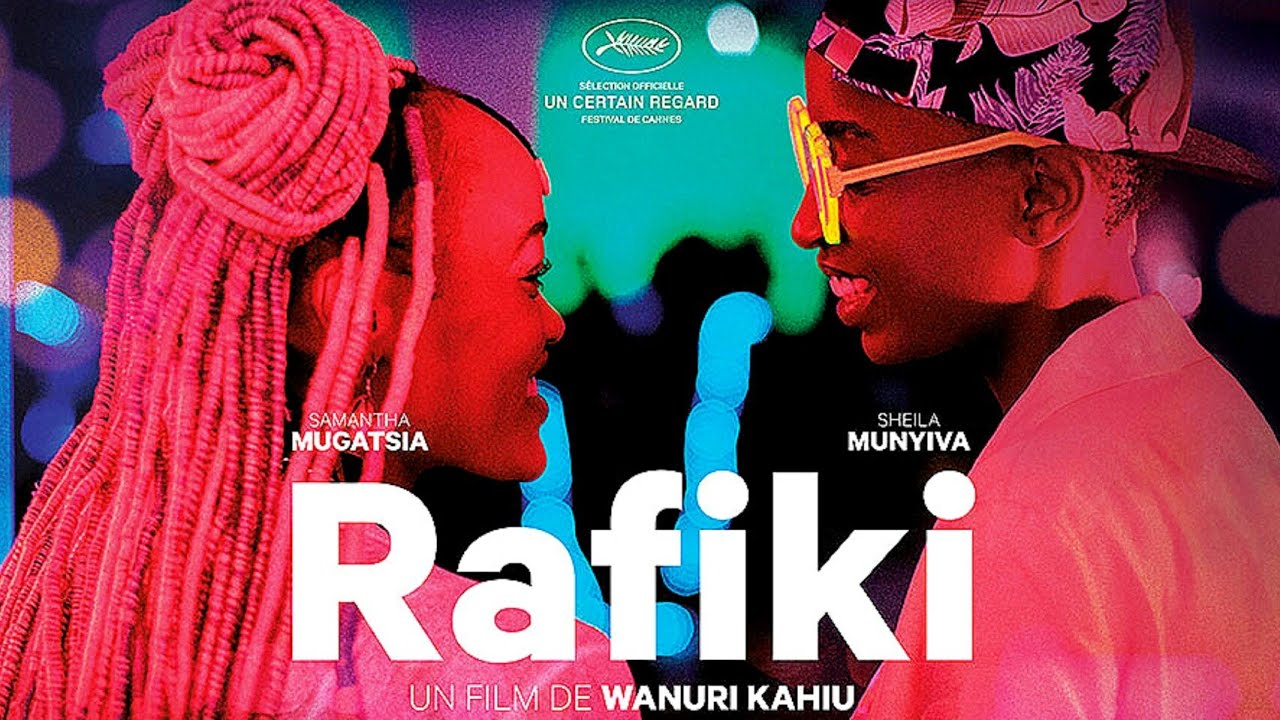
During the International Women’s Week, on March 5th, I attended the screening of the film titled “Rafiki” in the auditorium. The key message I got from this movie is that homosexuality is still not accepted in many countries, such as Kenya. Indeed, in this movie, Kena and Ziki fall in love both being young women having parents that are rivals in the upcoming elections. Despite how they feel about each other, homosexuality is frowned upon by the conservative community that they live in. Kena and Ziki were aware of these realities and had to hide their love in the public. However, they are beaten up by the community when they are exposed as being homosexuals, which shows the cruelty as well as the closed-mindedness of the community. This film shows that the fight for LGBTQ+ rights is not over and that everybody has to continue to fight for equal rights between people of all sexualities. 

Some students reacted very emotionally even shedding tears while watching this movie as the two women who loved each other in the film had to hide their emotions to not be frowned upon by their community and because these women were hurt physically because of their sexual orientation, which is definitely hard to watch. Others were shocked by the fact that this inequality still happens today. 

This screening made me think differently as I was unaware of the extent to which some people are treated solely because of their sexual orientation. This is very alarming as I believe that people should be treated equally no matter their sexual orientation. The community completely rejected Kena and Ziki and believed they were possessed by demons for being themselves. They were beaten up to the point that they were bleeding and even Kena’s own mother, as well as Ziki’s parents, rejected them. This made me think that we have to continue to fight for LBGTQ+ rights in order for people to be treated equally no matter their sexuality. 

Additional information that I can add to my review would be the fact that this film was nominated as the best foreign-language film at the Oscar Awards. However, it was later removed from its nomination as Kenya officials banned the film for promoting lesbianism. This information shows that still today some officials are homophobic and that people have to continue to fight for equality for people in the LBGTQ+ community. Even in big award shows, there is inequality based on one’s sexual orientation.

I would recommend this film to my friends as it is a beautiful film that shows the love between Kena and Ziki. This film shows the reality of a conservative country, such as Kenya. In addition, it is a movie from African cinema, This allows people to explore movies from a different region as many people, nowadays, only watch very popular movies from Hollywood. This movie opens the mind of its viewers making them think about the society we live in today. In my opinion, this is a must-watch movie for everybody.

Blog 4: International Women’s Week

During International Women’s Week, I attended the screening of Rafiki movie. This film is about two young women, Kena and Ziki, who identify as homosexuals, in Kenya. These two women have an intimate relationship together. Their fathers are political rivals which creates tension and pressure on the two women. They are both pressured by the homophobic views of their society, and to take their father’s political party. Throughout the movie, Kena and Ziki are victims of prejudice, and they are verbally and physically abused because of their sexual orientation. They are separated later in the movie. It is only after a few years that they reunite, and that they can finally be together.

I think that the main message of this film is that these young women show the importance of embracing one’s sexual orientation no matter the political rules, views, and pressure the families, friends and society might have. For example, they did not stop seeing each other after the numerous abuses, and problems they went through. Expect the time they were separated against their will that they were unable to fight for their love.

This film reminded me that we do not share the same freedom of expression compared to other countries. It pointed out and showed me how LBGTQ+ communities must hide, and how they get arrested for their sexual orientation in some countries. It demonstrates how in certain countries such as Canada and the United-States, we have the opportunity, most of the time, to be ourselves without experiencing discrimination, and frequent verbal and physical assaults. This film did not make me see these issues differently, however, it reminded me of the difficulties, and horrific acts people go through for the things we take for granted. This representation of a homosexual’s life in Kenya was very controversial for the Kenyan government because homosexuality is illegal in Kenya. Sadly, the movie was banned from the Kenya Film Classification Board. It also demonstrates the main message of the movie through discriminative acts that the film faced.

I would recommend this movie for its relatable message such as the topic of young love and how it shows that across the world we go through the same emotions, and relationships regardless of the gender of the love. I also love that people of color could express their own stories and experiences based on their one creative freedom and views. By interview some people at the screening, they shared to me these thoughts which I found very interesting and accurate.

https://en.wikipedia.org/wiki/Rafiki

Blog 4: International Women Week

Image result for rafiki movie

For Women International Week I went to see a movie called Rafiki. This movie talks about the life of two girls named Ziki and Kena who live in the country of Kenya. Both of their families are politicians and are fighting against each other. After meeting a couple of times, Ziki and Kena started loving each other despite their families being rivals. Kenya is a country that strictly prohibits homosexuality and now they both have to remain quiet about their feelings and make sure to not revealing to the public. In addition, it was nominated for the best foreign language film at 91st Academy Awards, however, it was later removed because the Kenyan authorities banned this film for promoting homosexuality, which is against the law.  Furthermore, the key message I got from this screening was that love does not depend on your gender. Love is non-binary which means that it is not restricted to femininity and masculinity. Moreover, the director and writer of Rafiki, Wanuri Kahiu is against any labels. In a Ted Talk, she said, “I am a filmmaker, not Black African filmmaker, I am only a filmmaker”. She is a feminist, so she wants equality between men and women and this film portrayed her views on what she believes is the right thing to do.

The screening of this movie did not make me think differently about LGBTQ+ rights. Before watching the film, I was already aware that we already need to have equal rights both politically and socially. However, when I watched the movie what made me think differently is that for some societies it is more difficult to have these rights be implemented. For instance, in the movie, there was a clear representation of the role of religion in Kenya. The church is important for the Kenyan population and the is the factor that prevents people to change their minds about the LGBTQ+ society. For western societies is difficult as well, but religious factors are no longer involved politically.

After watching the film, I interviewed some students about how they felt about the movie. All the students that I interviewed really liked the movie. They said that it had a great storyline and did not know that this film even existed and that they are more open to watching foreign movies. I asked the students “what do you think about the movie”? One student said that it really represented how the LGBTQ+ community feels in society.  She told me that at first, her parents were not supportive of her being lesbian and that she related to the character Ziki. The parents of the character were angry and disappointed at her when her relationship with Kena was revealed. They even slapped her in the face. In addition, another student said that we need to promote equal rights in other parts of the world and show them how it is beneficial for society. He told me that he does not know that Kenya was that strict on homosexuality.

In conclusion, I would recommend watching Rafiki to my friends. I feel that most people are used to watch commercial movies and do not give enough credit to international movies. This movie had a great love story and a message that could be applied to everyone around the world which will change the perspective of other individuals on the idea of the LGBTQ+ community. This screening enables people to have empathy for the characters. I could feel the emotions of Kena and Ziki even though I am not part of the LGBTQ+ community. Overall, this, in my opinion, this movie could have won the Acadamy Award for the Best Foreign Language Movie.