Feminism in Ocean’s 8

WATCH: Ocean's 8 Trailer - KiSS 105.3 Ottawa

In the first three Ocean’s movies, there were always the top male actors such as George Clooney, Brad Pitt and Matt Damon. There was no real representation of women in the movie. The Ocean’s movies were usually about a group of ten men that perform a big heist in a casino or a bank. However, in Ocean’s 8 it is the same concept, but there are height women doing the robbing. This movie has taught that women can be clever, strong, and it debunks female stereotypes that society has imposed on them.

First of all, Ocean’s 8 represents feminist ideas because women are portrayed as being clever. In the original Ocean’s movies, all the men are intelligent, and the women are unfortunately not represented that way. However, in Ocean’s 8, all the women are clever. In the movie, the women have to perform a heist where they have to steal a very expensive diamond necklace. In order to do that, the main actress, Sandra Bullock, has to assemble a team where each person has to be intelligent and strong. The team that she assembled were all women. It shows that women can do a challenging task as well. In society, there is a lot of individuals who think that women are not qualified to do a certain difficult task. For instance, during the presidential vote in 2016, there were some citizens were interviewed and said that Hilary Clinton cannot be our president because she is a woman. This movie demonstrated that women can do be as clever as men.

Second of all, the Ocean’s 8 women go opposite of the patriarchal society which shows that they are strong individuals. In the earlier versions of the Ocean’s movies, the men did the work and the women stayed at home, it was a typical representation of a patriarchal society.  For example, the wife of George Clooney, Julia Roberts, became a housewife and George did all the work. Ocean 8 opposes that way of leaving and shows that women are strong individuals. Women and men are doing the work to support their families. For instance, one of the main actresses, Sarah Paulson, has two kids and her and his husband both work to provide for the family.

Finally, Ocean’s 8 uncovers female stereotypes that society has unfortunately created. In this movie, women are not represented as a typical feminine girl. In other words, they aren’t portrayed as being “girly”, they are in fact, more mature. Normally, in Hollywood films or tv series we often women as young, small, and don’t talk too much. They are only there to display their beauty and bodies. However, in Ocean’s 8, the women are beautiful, but not all of them are young and none of them are girly. The main characters are not just there to show their beauties to the audience, they are them to play a true role. Furthermore, the way that they talk is also a way they broke female stereotypes. In the film, the audience could one of the main characters, Cate Blanchett, has short hair and the way that she talks is often rough and though, her voice has power like most of the females in the movie.

In conclusion, Ocean 8’s was a great movie that portrayed feminist ideas. It portrayed the women as being bright and intelligent individuals, strong by showing an equal society rather than a patriarchal one and impartial by contradicting female social stereotypes. This film is a great step for Hollywood to show women as a true character in the film rather than a model of beauty only.

Feminism in Knock Down the House

KNOCK DOWN THE HOUSE AND HOW WOMEN SHAPED 2018

kdth

THE FIRST TIME I watched this documentary was last year. Ever since that first time, I have rewatched it multiple times, for the sheer emotional and inspirational power this movie holds, as well as the feminist message it sends, has moved me in many ways.

“We’re coming out of the belly of the beast, kicking and screaming,” are the powerful words of Paula Jean Swearengin, one of the four women running for Congress presented in this film. These words are the perfect imagery for the first charged feminist message this film puts forward: Women can fight back, and they are. One thing the four women we learn to know in this movie have in common is that they were running for congress to help their underserved, inequality-ridden communities gain justice and genuine representation. These women, with all the odds stacked against them, rose from their non-political backgrounds to challenge their established representatives and bright some change to their communities, regardless of the outcome, when they saw their communities struggle under the weight of the American system.

Another powerful message that this film puts forward is the strength of the so-called ordinary woman. The four women who were presented to the viewer were one of many average Americans (a nurse, a bartender, etc.) and all came from humble backgrounds, who then went to run grassroots campaigns without corporate backing. In the case of AOC, she was a bartender from the Bronx that transformed into a confident public speaker that won with a grassroots campaign in what political analysts have called one of the biggest political upsets in modern American politics. To run campaigns, which are extremely time-consuming and exhausting, that touched the lives and hearts of so many without corporate backing, shows the strength of women.

Furthermore, the grassroots campaigns these women ran and the difficulty that came with it exposed the feminist issue of class. From working-class backgrounds, the women running for Congress faced difficulties and obstacles in their campaigns that their opponents didn’t. From funding to getting recognition and credibility, Bush, Vilela, Ocasio-Cortez and Swearengin fought harder than anyone else to bring their campaigns to fruition, twice as hard as their opponents who were bred to become politicians or were backed by the Democratic establishment, which became a good show of the class divide in America and how hard some have to work to achieve the same as others who do not do much.

Lastly, the film shows how women, people of color, and overall political outsiders, when given a stage and support, flourish and become the organizers their communities need. Every single one of the candidates this film presented created, regardless of how small, a movement in their communities that will spur other candidates like them to run for office and became activists in their own rights, while facing their own personal difficulties. Thanks to the support of their communities and Justice Democrats among others, these fearless women gave their all to make sure their communities would have a better future. Only one made it to Congress, but all made a difference.


MULAN

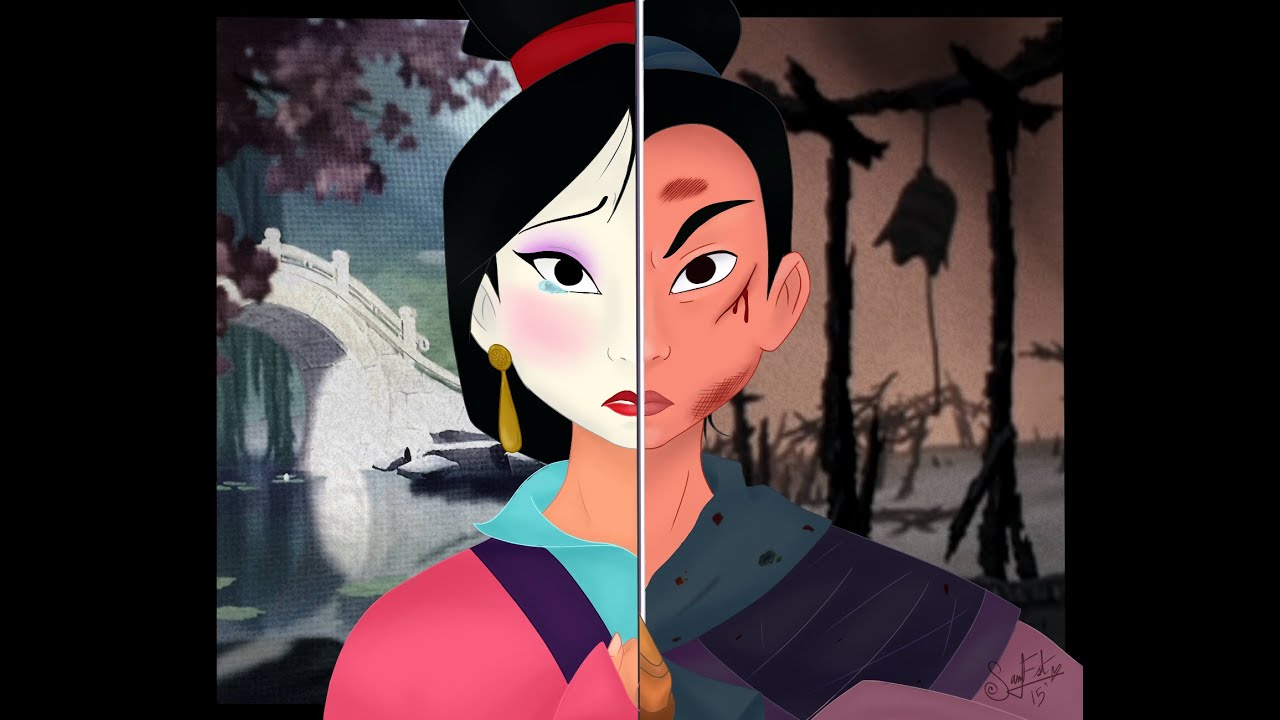
In the context of this course I had to choose a cinematographic work putting forward feminist ideas and concepts. I have decided to pick the movie Mulan. Mulan is a Disney animated movie taking place during the imperial time in China. A group of nomad warriors called the Huns were threatening to invade the Chinese land and were a menace to the people. Because of that, the Emperor asked that one man of each family joined the army to protect the Empire. The person who will be the most helpful to protect the people is a teenage girl called Mulan. This movie is very empowering and shows girls from a very young age that gender does not define their abilities to do whatever they want, as long as they stay true to themselves.

The first concept brought upon in the movie is the role women have in the Chinese culture. At the time, young woman were count on to uphold the family honor, if they did not get married, they brought great shame to their family. In one of the first scenes of the movies, Mulan, the main character, had reached the age where, according to tradition, she had to meet a “match maker”, a woman who would determine if she had the abilities to become a bride. As in all Disney movies, a song accompanied the scene, giving a very clear idea of what a girl was destined to become in the imperial china. One verse said that men wanted obediant girls who can have children and have a tiny waists while another verse said that men honored the emperor by bearing arms and girls honored him by bearing sons. during her encounter with the match maker, she was told that she was too skinny and that it was not good for bearing children. Mulan was very stressed and clumsy during her interview because she had to act in a way that was not herself. Her attitude did not please the match maker, who told her she would never bring honour to her family, which saddened Mulan because she understood that, by being herself, her family would lose other people’s respect.

Another concept challenged in the movie is the ability of women to be treated as men’s equal. After having ruined her chances of finding a respectable husband, Mulan found out that her father had to join the army during a visit from the Emperor’s counselor. She immediately intervened, asking that her father would not be forced to join the army because he had already served his country and was injured. The messenger was very shocked that she dared address him without permission to speak. The fact that she “stood up” for her father was very humiliating for him. She then decided, in the middle of the night, to cut her hair (long hair being a symbol of beauty), tie it like a man, bear her fathers armor, and take his place in the army. Arriving at the training camp she had to train alongside the other soldiers but she was slower than them. The Captain Shang therefore sent her home but she did not let herself be brought down by that and worked harder and smarter to prove she was as strong as men. Proving herself, she was allowed to stay and rapidly became one of the best soldiers, and even saved the captain’s life from an invaders attack that she helped win. At that moment she had gained the respect of Shang respect. Unfortunately, by saving him, she had hurt herself and a doctor had to examine her body, discovering she was a girl (she disguised herself as a soldier named Ping). The news was soon discovered by all her companions and the Captain was told by the counselor that she was guilty of high treason and ultimate dishonor meaning she had to be executed. Luckily for her, Shang did not kill her but he exiled her, leaving her alone in the mountains. It is interesting to see how Mulan was a very respected soldier before people knew she was a woman! Her gender could have costed her her life!

Left alone in the snowy mountain, Mulan realises she did not take her father’s place only to protect him. She also wanted to prove to herself that she was capable of doing things right, that she was worthwile. It had certainly been hard for her to learn that she was not good enough to become a bride and bring honor to her family. At that same moment, she sees from afar the Hun invaders enter the city. She immediately decides to rush to the city and warn the soldiers, who were entering the city as “saviours of China”, that they had failed to supress the invaders and that the country was still in danger. At first, the captain Shang, who once had respected and trusted her (as Ping), was reluctant to believe her. Seeing the Huns attack the city after Mulan had warned him brought him bak to his senses and he decided to trust her. So, after convincing Shang and her three soldier friends to help her stop the invaders, she saved the Empire! The Emperor and all China bowed down to her, the hero! The Emperor offered her a medallion, the sword of the leader of the Huns that she had managed to defeat and a place as counselor (firing the man who had treated her of treator and had said that she was not a hero, she was a woman and she would never be worth anything). Following her heart, she refused the offer to become counselor and decided to go back home to her father, who, by then had realised that the greatest honor he could ever have was to be Mulan’s father, a smart girl who spoke her mind and followed her heart.

Mulan was the last of the 90’s Disney princess movies, even thought she is not really a princess. She repeatedly challenged the role of women in the Chinese Society and proved that being a woman is not synonym of weakness. She proved that her gender did not define her abilities in both physical and psychological areas by demonstrating that military tactic, physical endurance, strenght and loyalty are not things proper to men, but to every individual who has the courage to be themselves and work hard to excel in their talents. Not only does this movie present women and men as equal, it points out that a woman does not have to meet society’s norms to be an ideal wife. In the words of the Emperor, “the flower that blooms in adversity is the most rare and beautiful of all”.

American Horror Story

American Horror Story has been a series I’ve always loved to watch. It incorporates different aspects of horror, spine-chilling and macabre scenes throughout the whole season. This famous television series has a different storyline for each season which I find truly unique. This show was created by Ryan Murphy and Brad Falchuk, back in 2011. The eighth season of the series was named “the apocalypse” (my ultimate fav!) and I believe it contains many underlying feminist aspects to it that viewers might have not realized. The Apocalypse is a season that represents strong feminism in a patriarchy dominated era. 

American Horror Story: Coven' Has a Big-Star Lineup - The New York ...

The story starts off with the main characters who are 7 powerful witches from a line of descent of the Salem witches back in 1692. There’s even a flashback period to this time era, where they made a reference to the Salem Witch Trial at some point throughout the show, which displays aspects of feminism. In a society where everybody (mostly men at power) wanted all the witches to suffer and burn at stake, they portrayed true feminine strength by standing big and tall at the end of their lives, while screaming “mark my words, my bloodline will never go extinct!” I believe that this is a true feminist movement. Back in those days, males dominated almost every aspect and women didn’t have much say, notably in governmental institutions.

The apocalypse was a series emphasizing a young man named Michael Langdon that grows up to be the antichrist and wants to take over the world. However, a group of powerful female witches join forces in order to beat the antichrist. Satan himself is represented as a man which shows male dominance and extreme masculinity. He is portrayed as the most powerful person in the world and even the witches alone won’t be able to stop him. The women had to learn to work together in order to overcome the antichrist and they learnt that in order to survive they needed to work together. An important aspect that I want to emphasize on would be how they portrayed ultimate girl power and how female relationships are important. For the female witches to survive they needed to unite as one, and that’s when they realized how powerful they are. This was absolutely empowering knowing that women coming together could conquer the impossible. 

Moreover, throughout the series the viewers figure out that the supreme witch (the term for the ultimate witch leader) was dying due to old age and they needed to figure out who would be the next supreme. However, the criteria of becoming the next supreme witch was based on how well you can manipulate the seven wonders of the world. Which consists of different magic abilities such as mortis, vitalis, concilium, clairvoyance and transferal. Here I’ve inserted a clip of the movie to show you how the antichrist was able to manipulate all these perfectly whereas the female witches were only able to do one type of magic. The next supreme witch was about to be the antichrist until the female witches realized that they needed to work together in order to defeat him once and for all. 


To conclude, I enjoyed watching that season of American horror story since it uncovers many underlying feminine and masculine aspects. It also portrays how women are being perceived in the 21st century with a little twist of comedy and gruesomeness, this is why I enjoy the show. I also love seeing women coming together in order to fight off the “bad guy” which is usually portrayed as a man in this case, Satan himself. Patriarchy is still present in our society today however much less compared to back in the days. Even though this is a fictitious serie I think thats its amazing that women back in the 1600’s had already begun the feminist movements starting with the Salem witch trials. 

Final Project: Exploring Feminism

In the hit television series “Grey’s Anatomy”, the show is based around the medical field and the day to day lives of the surgeons that work in the hospital. Viewers get an insight of what it is really like to be a surgeon and the difficult tasks they all have to complete in order to become the finest doctors. The show mostly showcases the life of Merideth Grey, who is one of the main characters in the show as well as her friends Alex, Amelia, Maggie and more. This show has always been interesting to me because of the medical point of view, but it also includes women tearing down stereotypes from society.

Throughout the series we encounter many characters taking turns to be the head of their department speciality and the chief of the hospital. There have been around four people we see that we have been chief of the hospital, three of the four being male. The first black women to ever be chief of the hospital, Miranda Bailey has gone against the common stereotype of only male counterparts having a high position in the workplace. Dr. Bailey has gone against society’s idea of only having males in high positions and made the hospital the best it could be. 

When Dr.Bailey was chief, she felt the pressure of having to look nice when she goes into work, which includes wearing heels. In one of the episodes, she stated how she felt imprisoned and confined in the heels all because she has a higher position. She tells her husband how she feels it is unfair she has to walk in uncomfortable heels, instead of her surgery shoes, all because she has to fit a certain criterion. She then takes off her heels, not caring about what her colleagues will say about her unprofessional attitude. 

Another example of the show showing characters going against stereotypes is having the majority of departments with women as the head of them. There is a woman as the head of trauma, cardio thoracic, general and neuro. This is a huge step from what it used to be in society, with only males having higher positions in the workplace. No one steps down on them or treats them differently in the show, just because they have higher positions than others. It shows how women have the ability to have certain positions and should be offered it when it is well deserved.

This show really takes back what society sees as normal for how the workplace should be ran. It shows women empowerment and goes against certain stereotypes for gender. These women that have been put in higher positions are because they deserve to be there thanks to their talent and brilliant minds. It shows that women can be anything they set their mind to and no male counterpart should diminish them or make them feel as if they don’t deserve it. 

Grey’s Anatomy

The one good thing that came out of this quarantine was the show I started to watch on Netflix; Greys Anatomy! I have been obsessed with it for over a month, and I seriously have never watched a show that could bring up so many emotions, I have to remind myself that this is just a story line and the characters aren’t real! The show is now at 16 seasons, and I believe they are filming more. This being said, over the course of the seasons, Shonda Rhimes (the executive producer and creator of the show) has incorporated many important subjects, such as feminism and the LGTBQ community.

The first time this is demonstrated is in the fourth episode of the first season. This episode seemed to focus a lot on the female gender, because most of it focused on how Izzie Stevens used to be a model. This led to many of her pictures being posted and talk around the hospital and underlined the way that men and women think about female models. One patient even denied her the opportunity to conduct surgery on him because he fantasized about her before. Izzie used the money she made from modelling to pay for all her Medical school bills, and is now a surgeon, so why is she shamed for modelling? This does not defy her in any way, or change any aspect of her mind, and intelligence. We see throughout the episode and the season that she is often faced with this subject but learns how to overcome and confront it.

One episode in the more recent seasons, showed a controversial scene. When neurosurgeon Amelia Shepard heard that one of her interns, Stephanie Edwards, had lied about “being sick her entire childhood” to get in on a surgery, she immediately confronted her, and punished her for lying. However, Amelia came to find out that she was not lying and felt terrible for accusing her. Before they entered the operating room, Amelia apologized to Stephanie for quickly believing she was a liar. Because Stephanie is a woman of color, Amelia worried that Stephanie would think she was racist. So, Amelia asked her; you don’t think it’s because…that I believed you were a liar, right? Because that’s not the case. Stephanie proceeded with explaining to Amelia, that the thought of people around her treating her different will always be there, and in fact she did think of it at first, when she was first accused. But she knew that Amelia was genuine and looked at her as an equal, this was just a mistake. While their conversation was brief, Amelia still found herself thinking about it after the surgery. She brought the subject up to another surgeon and friend, Maggie Pierce, who is also a woman of color. Maggie proceeded to tell her; I am not the spokesperson for all black woman, but I will say that it is something we deal with our whole life. But I am sure she does believe you and there is nothing to feel bad about. The whole situation really made Amelia reflect, and come to realize that this really is something that will always be a part of their lives, and as long as she kept treating Stephanie as an equal, she would not feel discriminated. Grey’s Anatomy not only brought up the subject of race in this episode, but gender as well.

African American women are often shown in the show, as powerful and successful! Miranda Bailey, who eventually becomes the chief of surgery! Maggie Peirce who is the chief of cardiovascular surgery. Lastly, Catherine Avery/Fox, who is an extremely successful surgeon of color who is known worldwide, owning 20 hospitals! Apart from African American women, they also portray a lot of other women as successful chiefs and attending. Arizona: Chief of pediatrics, Callie: chief of ortho, Meredith: chief of general, Teddy: chief of cardio, to name a few!) I love that they do not show men as more successful surgeons, but instead an equal amount for each gender. Especially with the continuous throwbacks of Meredith Grey’s mother, who was the first female surgeon to receive a Harper Avery award. Her character also plays a huge role with the feminism aspect of the show. Speaking of the prestigious Harper Avery Award, only 2 surgeons from Seattle Grace hospital are nominated throughout the seasons, and both are women! (Cristina and Meredith, Meredith even wins it!)

The show can connect gender, race, and everything in between very well. Race seems to be varied between the characters and gender as well with both males and females taking positions of power in the hospital. In my opinion, the show does a good job of including all types of people, even if they’re not main characters. For example, the show includes many different types of patients, some with mental illnesses, some with disabilities, and patients of many different classes.

Blog 7: Self-Made: Inspired by the Life of Madam C.J. Walker

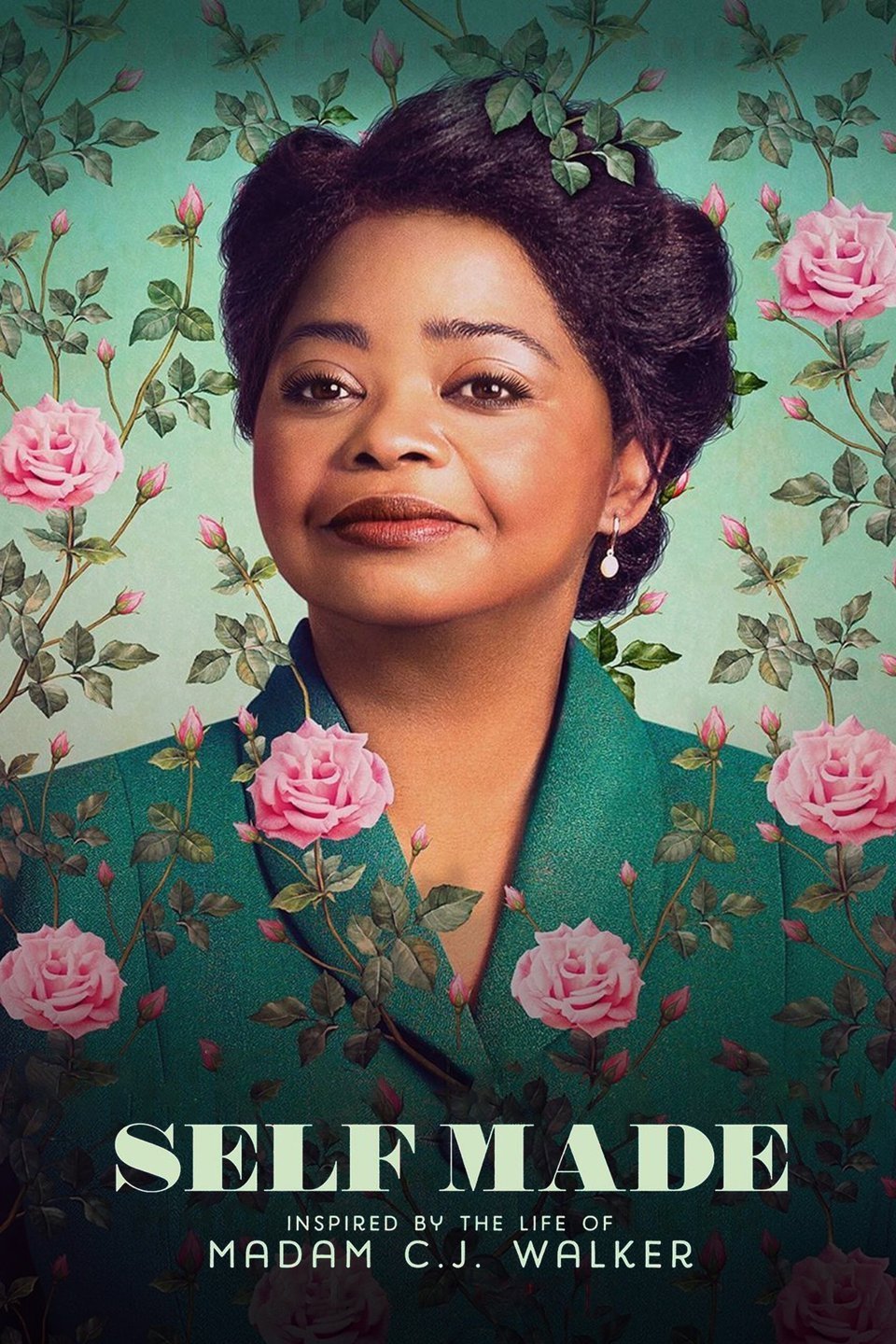
Self-Made: Inspired by the Life of Madam C.J. Walker is a four part limited series on Netflix. It displays the life of Madam C.J. Walker, who was the first African American self-made millionaire. The series aired March 20th 2020 starring Octavia Spencer – who has played many gender defying roles like Hidden Figures and The Shape of Water. I first saw it when it premiered on my “Suggested for You”. The series takes place in 1910 America, a little bit over 40 years after the American civil war. Sarah Breedlove is an African American woman, born and raised in St. Louis, Louisiana, who was orphaned at the age of 7, married at the age of 14 pregnant at the age of 15 and to top it off widowed at the age of 20. She did remarry twice afterwards and gave herself the title Madam C. J. Walker after her last husband, Charles Joseph Walker. She had a dream to create a hair product for African American women as well as being suitable for their hair type. She suffered from hair loss due to stress while being a washerwoman for many years and could not take care of her hair due to the lack of hair grower on the market. As a result, she chose to fabricate and sell her own hair grower after another women had introduced it to her.

Sarah Breedlove was approached by a light skinned women who introduced her to the powers of hair growth. The light skinned woman, Annie Minerva Turnbo Malone, met Breedlove at a very dark time in her life. When African American women were using goose fat, heavy oils, soap, or bacon grease to grow and strengthen their hair, Annie had created a sulfur based hair-grower. History and movie tell it different, Breedlove and Malone had a disagreement over how the hair grower should be sold. This pushed Breedlove to make her own formula of hair grower and sell it as her as her own product and brand. To avoid living in Malone’s shadow, she moved to Indianapolis – with her husband C. J. Walker – to start her business there. At the time, many African American citizens moved to Indianapolis because the real estate was cheap and they had a lot of people from the same community as them settled in the city and its outskirts. At first, not many people believed in Breedlove because of her race and gender. However, she defied odds, by herself, by successfully selling her product and opening a hair salon. Contrary to what you would assume, she did have the full support of her husband. In the series, he is portrayed as a caring and loving husband. His father, on the other hand, did not appreciate the fact that it was his wife coming up with the bright ideas and acting upon her dreams. He says to his son, “What kind of self-respecting negro works for his wife?” then follows with “Never get your money where you get your honey”.

There are many obstacles that Madam C.J.Walker had to face in order to reach her goal. Nevertheless, she was determined. She lived in a society where African American people were still referred to as “colored” and “negro“. She was not respected and, you can even say, highly underestimated. What Madam C. J. Walker did was use all of these labels that society had placed on her and made herself a millionaire out of it. To be specific, she targeted what was missing in the market and sold the dream. She used herself as marketing by telling her story to the women who were willing to listen to her. If you think about it logically, a African American woman made a product for the millions of African American women and flourished from there. In the series, she’s seen telling her story to a crown of dark skinned women in order to sell her product. However, what could be seen is that she is reaching out to the women; by targeting their struggles and their insecurities and linking them to her own, she was able to make them believe her and in her.

Furthermore, the main antagonist, Addie Malone, claims that dark skinned women want to look like her and that is the idea she wants to sell with her product. Which can suggest that white is the beauty standard in early 1900 America. Frankly, it is still the case in multiple environments in 2020. When Sarah Breedlove offers to sell her product for her, Malone declines her request by saying “you don’t have the right look”, referring to her darker skin tone. This is a representation of how racial discrimination still plagued the United States of America and, in a way, shackled every dark skinned American with a dream. In fact, even in the famous movie Hidden Figures, which is based a lot later in time, 1961, there is still discrimination against dark skinned women. Not only is it hard for a women, even in this day and age, to make a name for herself without the help of a man; it’s even harder for a dark skinned woman. The same situation can be seen in the movies The Help and Daughters of the Dust.

To sum up, I really enjoyed watching the series. It tackles many subjects like racism, sexism, gender norms and business. The tale of Sarah Breedlove – Madam C. J. Walker – paved the way for many other dark skinned woman to create what they need and make a living out of it. When I watch movies with a leading woman, of any race, it gives me confidence to pursue any career I want. It also reminds me to be stand up for myself as well as be confident about who I am and where I’m from. As much as I want to say that we should not pay attention to gender or race, I cannot. All these inspiring stories are inspiring because the main characters embraced what made them different and left their mark on the world with those exacts differences. Madam C. J. Walker embraced the fact that she was a dark skinned woman, pushed through social and gender norms, worked hard, made a millionaire of herself and that’s why her story is, now, a four part series on the biggest streaming network of 2020. To add, I see a pattern of women who have been discriminated for their gender, as well as their race, have bigger breakthroughs than men and women who are more socially accept for their race.

“Portrait de la jeune fille en feu”

artworks-000580325681-slj3yc-t500x500

“Portrait of a Lady on Fire” is a French film, written and directed by Celine Sciamma. This film is a beautiful art piece that celebrates women in a million different ways. 99% of the cast for this film were female, and any men who are in this movie are blurred, in the background and noticeably an intrusion. This film centers around a lesbian love affair as it deals with abortion, forced marriage and women as artists.


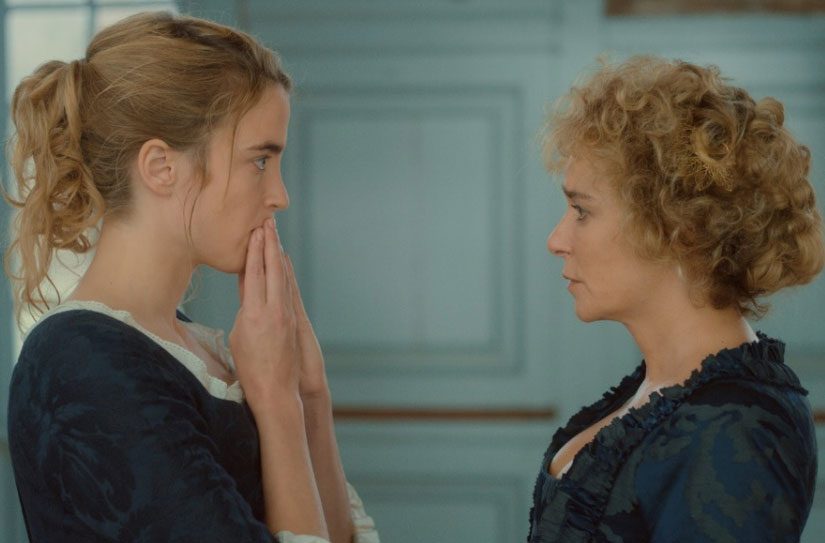
Set in the 18th century, in coastal France, we meet a young painter following in her fathers footsteps.portrait-of-a-lady-on-firemotherdaughter She has come to a manor to paint the portrait of a lady who has just been forcibly removed from her convent life so that she can marry a man who has been chosen for her. Immediately we are met with patriarchy at its finest. Heloise has been enjoying her pious life until she is expected to fulfill her roles as a daughter after her sister commits suicide. Even Heloise’s mother is so deeply ingrained in the patriarchal construct that she sees nothing wrong with the situation and expects Heloise to believe it also. Her betrothed has never met nor seen her, therefore her mother commissions a portrait to be done of her to send to this stranger. Heloise resists and at the moment Marianne arrives, we learn that Heloise has already refused to pose for one painter therefore Marianne must paint her without her knowing.

portrait-of-a-lady-on-fire-naomie-merchant-900x0-c-default

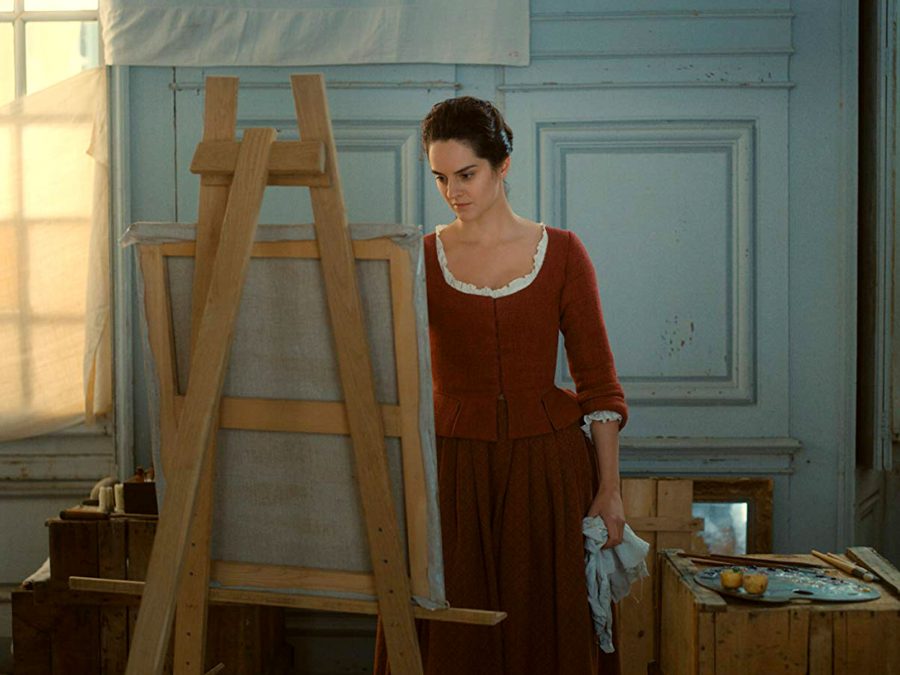
Marianne is the daughter of a very famous painter – she is known only for her relation to him instead of being known for her incredible talent. During the 18th century it was not common for women to become artists. Women were expected to marry as soon as possible, start a family and become wives and mothers, upholding patriarchal expectations of what it meant to be female. The only reason Marianne was able to follow her passion, was because of her fathers fame and fortune – the family was rich enough that it was not necessary for Marianne to seek wealth and security from marriage. She is a unique exception for women at that time, and it is brought up between Heloise and Marianne many times, especially when Heloise is upset at not being able to choose her own future.

One of the most poignant moments of this film is when the character of the housemaid, Sophie, finds herself pregnant without any other option but to terminate the pregnancy. 18th Century society did not condone abortions – they were considered a sin and medical professionals did not perform them due to social and religious stigma. Sophie confides in Heloise and Marianne, and together they are able to find a woman who performs them in her house – not very sterile, not very safe – however, during these times it would have been impossible for Sophie to have a child and not lose her entire livelihood. This scene is raw, dark and emotional. It is difficult to watch, but Heloise is fascinated and forces Marianne to watch the procedure – she later instructs Marianne to paint the scene, using poor recovering Sophie as the model of herself. The act of reproducing this scene, as a form of art, really calls to light how women’s suffering has historically been swept under the rug and considered taboo. There are no images from history that tell this very real story – women were continuously forced to sacrifice themselves for their own survival. Turning that horrific experience into a piece of art acts as a catalyst for Sophie, and women in general, to claim this painful experience as their own – as a woman’s experience.

Heloise, Marianne and Sophie are left alone in the house for a week while Heloise’s mother visits a nearby city. During this time, the three women form a very close and unique friendship. There are some beautiful scenes where each of them seem to switch roles with each other.

1_fSO_lfdqLZ9ZoEztJ-A2PQ

Heloise, the aristocrat, is seen preparing a meal – cutting vegetables and handling a knife. This role is typically done by the house staff, yet Heloise has her sleeves rolled up and is enthusiastically consumed by her task. Marianne, the artist, sips wine and surveys the scene – looking over the other’s shoulders and observing. This role would typically be played by the aristocrat, yet Marianne looks poised and perfect as she holds her glass. Sophie, the housemaid, is sitting quietly at the table working on an embroidery – carefully stitching with a delicate needle, creating art. Customarily, the artist would be creating art, yet here we see Sophie, the hired help, sitting calmly and peacefully stitching away. This scene shows the importance of female friendship, and when all men are gone, when no one else is watching, the women become just that – women. No preconceived roles or expectations are present, each woman is doing what each of them wants to do without any pressures to conform or act a certain way. It is a beautiful display of female friendship, showcasing the undeniable bond that links all women together.

I could probably talk about this film forever and ever – it is truly a wonderful piece of art. I won’t give away the ending, but I will say that if you see this film, make sure to have some tissues handy, especially near the end. It is a heartbreaking story that really champions the importance of female unity, friendship and understanding. Also – the story behind the muse and inspiration of this film could be made into a film itself….I’ll let you discover that one on your own.

Portrait de la jeune fille en feu. Director: Celine Sciamme. Pyramide Films, 2020. Film.


“Under the Shadow”: Womanhood is More than Just Motherhood

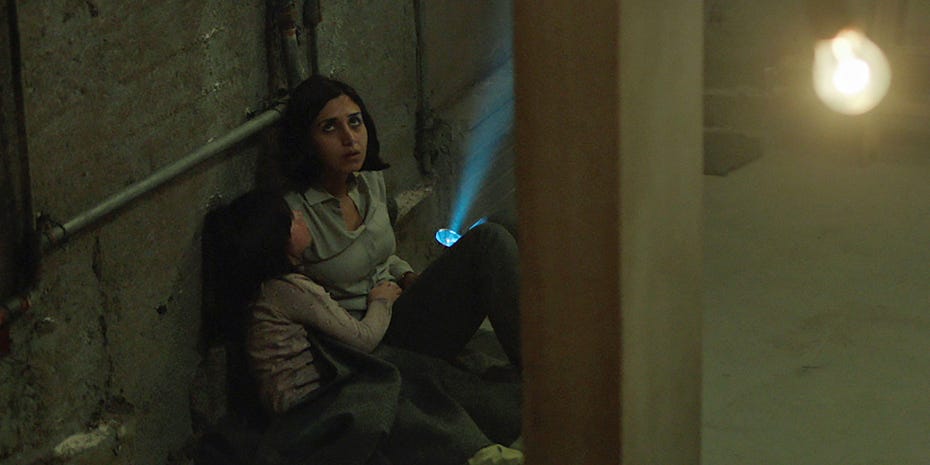
Under the shadow was a beautiful horror movie that combined war, motherhood, and the supernatural. Set in Tehran, during the Iran-Iraq war, the story follows Shideh and her daughter Dorsa who’s building gets hit by a missile. Shideh then becomes convinced that the missile carried a Djinn, a Middle-Eastern malicious spirit, into the building and that Dorsa is the main target. Right from the beginning of the movie, we follow Shideh as she gets refused re entrance to her university after she had joined a political group who took violent routes of rebellion. We see that Shideh once had the opportunity to enter university as a medical student and was actually encouraged by her mother. This is important to note as not that many women usually enter medicine back in the 80’s and especially not for such a patriarchal society. It is then seen that Shideh has quite a few rights and her husband sees her as an equal. She has basic rights like driving, which is noted by a secondary character in the movie who points out she is the only woman in the whole building to drive.

Once Shideh arrives home, we get to see a fight with her husband. He believes that the war is becoming much too dangerous for them to stay in that city and Shideh refuses to leave her home because of rumors that say Tehran is the next target for attack. In the fight, her husband suggests that they should relocate to his family’s house, to which Shideh responds is unnecessary. She makes it a point to him that she can take care of her child and is a capable mother. With this fight, a lot of people might have assumed that she was a neglectful or selfish mother because she didn’t put her child’s safety above everything. However, later in the movie, you can very clearly see how much she’s willing to do for her child. Dorsa, the daughter, had a very strong emotional attachment to a doll and the Djinn stole the doll in order to keep them hostage. Dorsa refused to leave without it, and Shideh spent long periods of time searching for it, even putting her life in danger to make her child happy.

On the topic of her refusal to leave, her husband calls her stubborn and irresponsible. In some cases, you could say that if a man were to refuse to leave his home during war, he is strong and brave. However, for a woman in the same context, she is selfish and a bad mother. Her refusal is a huge act of bravery and she stays strong for her child the whole time even when there’s alarms of missile attacks and they must hide in the basement. However, once she feels the supernatural is dangerous and they must leave, they are the last ones left in the building; all of the other families left one by one throughout the movie. She faces these horrific things alone, protects her child, and fights the Djinn. In the end, she does leave to go live with her in-laws, but I truly do feel like she showed absolute bravery the whole time. Her refusing to leave her home was strength to me, not stubbornness. And at no point in the movie did I ever think: “Shideh is a bad mother”.

Although the supernatural is a strong part of the movie, it’s also a very important thing to note how the war affected the setting. Not only did it make it scarier, but we get to see a strong woman go through such tough times. When she was younger, she had joined a political group who wanted to revolt against the gouvernement. She believed it was patriotic and she should do something for her country which is why she stopped attending her medical school. This is so important because even though the execution of her actions weren’t the best, she still was patriotic which is something you usually only see portrayed on men. Her husband also leaves to join the army as it’s annual mandatory enrollment forces him to. We then see how much women also go through when they’re left with their families during war. The man may be protecting his country, but the woman needs to protect her children alone now.

Another important aspect of womanhood that was highlighted in this movie was female friendships. When Shideh comes home from her rejection into the college, she picks up Dorsa from a neighbor. This neighbor was an older woman who offered solace to Shideh more than once. Not only could Shideh entrust her with her daughter, but she could also talk to her when she felt scared in their apartment. When another air raid siren goes off and everyone is forced into the basement, you see this older motherly figure stand with Shideh and comfort her while Dorsa talks to the kids of the other families. When the grandfather of the Ebrahimi family gets a heart attack from the missile landing in front of him, the family goes to Shideh asking for her help since she had some medical knowledge. When Shideh fails to save him and they’re all sitting outside as they wait for police, medics and bomb agents to clean up the place, that neighbor comforts Shideh by telling her she tried her best and there was nothing more she could do. Overall, having that relationship with someone is probably one of the reasons why Shideh stayed so strong through everything and that is why female friendship is important.

Blog 5: Captain Marvel and feminism

  A superhero is seen as a character who has power and who is present to bring some kind of balance to the world. But the superhero world created by Marvel is not very balanced in terms of gender balance. To change this disparity, Marvel decided to make a movie about a superheroine named captain Marvel. The movie was a success and I think that it also had a strong feminist message to pass. Captain Marvel is the story of Carol Danvers, who will become one of the most powerful superheroines in the universe when Earth is threatened by a galactic war between two extraterrestrial races.

  To begin, the main character of the movie is a female, and this female is a superheroine. It’s very interesting and something rare in the comix world. I think that this alone is a feminist message, because it shows that women can be very strong too and can even save the whole world. It’s not the first time that we have a superhero movie where the main character is a woman, but it’s still something rare and I’m glad to see that big companies like Marvel are doing some steps to make the comix world more gender balanced.

  Another thing that I found interesting is the fact that captain Marvel considered the strongest superhero in the Marvel world. If we closely follow the Marvel universe, we can even see that captain Marvel is supposed to save the whole universe in other movies. It transmits the message that women are equal to men and that we all need each other to survive.

  A scene that I found very inspiring for young women is the one where a little girl watches captain Marvel fly away in the sky, and this little girl wants to be as strong as her idol. This scene shows us that female characters can also be very inspiring, and it shows that young women should aspire to be as good as they can and that there is no limit for their growth. It’s a great message for everybody!

  Finally, I would really recommend watching this movie, especially if you’re into the Marvel universe. Captain Marvel represents a strong and ambitious woman who worked hard and never gave up on her dreams and friends, it has a lot of progressive messages in the whole movie. It’s a truly inspirational character and is in fact some sort of revolutionary movie for the comix world.