
Intersectional feminism

First off, every woman has different experiences and identities. Modern-day intersectional feminism recognizes these dissimilarities and has the goal to separate itself from white feminism. It acknowledges the fact that the feminist movement should encourage diversity among its members. In this case, it would be to have more non-white leaders and influencers. It confronts all the reasons discrimination takes place.
Indeed, intersectional feminism emphasizes other factors that cause women to be oppressed such as race, ethnicity, appearance, culture, economic status, sexual orientation, and gender. As the term “intersectional” was invented by Kimberlé Crenshaw, a black woman, and pushed by other Black feminist scholars during the thrid-wave feminism, this term is not new and holds significant history. In creating the intersectional feminist movement, Black women scholars of that time highlighted the singularities of their oppression. Their main goal was to combat the racism they faced in the white feminism movement, and the sexism they encountered in the Black liberational movements (led by Black men) of that era. She highlights the fact that we cannot put every woman in the same global image because there are many different social identities and women’s experiences.

How to practice intersectional feminism in current times? Women need to confront their privilege and to include every difference of all women, especially the ones that are marginalized. It is to understand that our own experiences do not apply to every woman and that we need to learn other women’s backgrounds. Therefore, to truly advocate for this movement people need to stand up not only to sexism but also to defend women who are discriminated against or oppressed based on their ethnicity, race, class, sexual orientation, and more.


Moreover, we need to respect bodily autonomy. It refers to respect for a woman’s body, appearance, religious clothes, etc. We need to respect and support a woman’s life and the decisions she makes which can be presented in many shapes.
Intersectionality shows that all types of discrimination play a role in women’s experiences and that it is not only about gender anymore. It includes every kind of factor of inequalities. Also, it consists of learning every type of feminism and gives these forms of feminism recognition.
 

Afraid to be a Woman

Think about your day. Was there a moment when you felt uncomfortable? A moment when you wished you were somewhere else because you did not feel safe? Odds are that it happened to you at least one time this week, maybe even without you noticing it. I know it happened to me, and it felt horrible. Yesterday, I was heading back home after school, it was about 8 PM and the metro wasn’t very occupied. I was tired so I decided to use the elevator to access the main floor. When I arrived to the elevator, I noticed a man, about three times my age, looking at me from afar. I couldn’t clearly see what he was looking at, but I knew he was staring at me and it made me quite uncomfortable. I decided that his bad manners wouldn’t affect my decision of taking the elevator, after all, I was really tired! But, when I entered the elevator, I automatically regretted my decision. I felt really unsafe and I was praying that another person would enter, which happened, thank God! He kept staring at me, and even seemed like he wanted to talk to me which, very honestly, scared me. As soon as the elevator doors opened, I rushed out and I didn’t look back … I felt bad and guilty, almost as if it was my fault that he acted like that towards me! I had the reflex to analyse my outfit, trying to understand what he was looking at! I was dressed in lousse black track pants, and a baggy black coat that I had zipped all the way to my chin and my hair tucked in my coat, really, it wasn’t pretty! Then I realised…I was feeling guilty of being a woman!

Once I got home, I decided to do some research. I knew I wasn’t the only young woman to whom this had happened and I wanted to know what to do, what to think, how to act if it happens again! But why should it happen again? Why should I be afraid of stepping out my door alone? So many questions where bumping into my head, how can the look of one man put me in such a terrible mood? Luckily, I found the answers to some of my questions. A study lead by R. Callus and A. Churchman demonstrated that 56% percent of Canadian woman are afraid of walking alone at night in their neighborhoods versus 18% of men. This basically means that more than the half of women in Canada live in society without being completely secure! What shocks me the most is that I was unaware that the sentiment I had experienced was shared by other women across the country (2004, 199)!

Later on during the day, I did a survey with some of my friends asking them a simple question: Did you ever feel like you had to cross the street to avoid a stranger who mad you feel threatened? Or did you ever feel unsafe while walking around in a public area? All the guys I asked that question to told me that the only reason why they ever felt like they had to cross the street is if they walked by a dog, and they only felt threatened if they crossed a group of boys their age because they didn’t want to get into a fight. On the opposite side, all the girls to whom I asked the same exact question responded that both situations had happened to them and that they always had a fear of getting kidnapped! And this just made me relise how much of an issue that is in society! How twisted it is! and I really wonder how we can remedy to that problem once and for all.

Kallus R. & Churchman A. (2004) Women’s struggle for urban safety. The Canadian experience and its applicability to the Israeli context. Planning Theory and Practice. Retrieved from http://web.a.ebscohost.com/ehost/pdfviewer/pdfviewer?vid=6&sid=bbc2a0e1-7dba-4d6c-bc5c-656a77dd7a1a%40sessionmgr4006

BLOG #2: Women in the Class Struggle

Often routinely ignored, the class struggle needs to be recognized as a feminist issue. In our capitalist society, the drawbacks of our current system, classism and sexism are interlinked. From the denial of basic human rights to all, to women and particularly women of colour facing higher rates of poverty than, of course, men but even white women, to “women’s work” being undervalued and underpaid (McKelle, 2014), feminism needs to address the consequences and setbacks capitalism and the oppression of the working classes have on everyone specially women, and women across every ethnicity, sexual orientation, gender expression, etc. However, due to various reasons, we are hesitant to take the necessary steps to ensure class AND women’s liberation.

For example, on a exclusively Marxist perspective, women’s battles come from capitalist oppression rather than male domination, which are obviously not mutually exclusive and actually work together to keep women in subordination. In mainstream feminist positions, middle class white women, who have seem to make themselves the face of the movement despite historical and current evidence of the major weightlifting by women of colour, working class women, etc.,   refuse to acknowledge classism as a pressing issue, or something to be addressed at all, for it upholds the status quo which middle and upper classes benefit from. I make the case that feminism and anti-capitalist movements (reformists and revolutionaries alike) need to consider the present issues, if they want to claim any semblance of a motivation for the liberation for all.

Freedom is not freedom until everyone is free, and this goal will ultimately only be achieved if we reach a consensus where classism, sexism, racism and all the other systems of oppression are addressed as problems with intersections that truly affect the lives of people at home and around the globe. In order to do so, we must organize communities, elect representatives (amongst other ways) and overall fight back against the systems that ignore us. Before we can do this, we need a firm basis of feminist theory that includes ALL INTERSECTIONS of the female and feminine experience, and make such theory accessible to all.


SOURCES:

RETRIEVED FROM: https://plato.stanford.edu/entries/feminism-class/#2

RETRIEVED FROM: https://link.springer.com/referenceworkentry/10.1007%2F978-1-4614-5583-7_682

RETRIEVED FROM: https://link.springer.com/chapter/10.1057/9781137326799_14

RETRIEVED FROM: https://everydayfeminism.com/2014/09/class-is-a-feminist-issue/

RETRIEVED FROM: https://splinternews.com/how-women-are-leading-the-class-struggle-1834721678


2. STEM

In the past, men were considered as the family providers leaving the women to take  responsibility over most household and domestic tasks. For the most part, women settled into their performative roles and did what society expected of them. They were expected to primarily take charge over chores such as cooking, cleaning and child care while the men went to work to financially support their family. For a long time, this reinforced the man’s traditional position as the head of the family. Recently, women have fought to earn better education as well as their place in the workforce opening doors to multiple fields for future generations of females to choose from. Although society has progressed to lessen segregation of women in certain occupations, there is still a clear gender gap of females and males in engineering to technology programs.

After doing some research, I found out that there were multiple reasons for the lack of female presence in engineering or technology programs. Despite the advances made in recent years, women are still less likely to choose a career in areas such as; engineering, mathematics and computer science. This stands in contrast to nearly all other fields of study, where women now represent the vast majority of graduates, for instance, in health and social science programs. One of the main reasons for the lack of female interest in these kinds of programs is the fact that society has been socially biased deeming these fields as masculine and underestimating the aptitudes and abilities of girls. Society has made a prejudice against women in science fields as less competent than men unless they exceed expectations. These stereotypes planted in our brains by societal norms are not only false but they also create a negative impact by putting limits of girl’s aspirations and by affecting the motivation and willingness of women to continue their education in technology or engineering programs since they tend to get discouraged quicker. Another reason women show a lack of interest in these fields ,because sexism is still heavily present in engineering or technology related jobs. Women work just as hard as men but get paid less , are often looked down upon and rarely get recognition for their achievements. All in all, science and technology fields are less appealing to women because professional success has been masculinized setting a tough standard for women to reach and because they aren’t treated with equity. 

Although the gender gap within technology and engineering programs is quite big, there are solutions that can encourage women to gain interest in these fields. For instance, in Montreal, Concordia University’s “Women In Engineering ” student group visits high schools and colleges to join engineering programs by talking about their fields or job and bringing awareness to younger women and encouraging them to join engineering programs. “Women In Engineering” gives younger generations of females a role model to look up to or aspire to become. Not only that but it also sends the message that women can do anything just as well as men can despite the common belief that girls are inferior to men when it comes to math and science related work fields. McGill University has a similar organization that also aims to bring awareness to younger women called “POWE”. ETS  even offers “ETS Scholarships for Women in Engineering ” to encourage women to continue their education in engineering. To sum it up, schools have been coming up with ways to gain for women in engineering and technology programs by exposing young women to the idea and by assuring that their education is paid for.

References:

4 Main Reasons Why There Is a Lack of Women in STEM, Vitor Silva, 4/29/19, https://www.builtbyme.com/lack-of-women-in-stem-reasons/

Why are there so few women in STEM?, WGU, July 1 2019, https://www.wgu.edu/blog/why-are-there-so-few-women-in-stem1907.html

Female engineering students work to be the role models they didn’t have, CBC, Elysha Enos, March 8 2017, https://www.cbc.ca/news/canada/montreal/stem-gender-women-science-quebec-1.4013958

Promoting Opportunities for Women in Engineering, McGill, https://www.mcgill.ca/engineering/students/undergraduate/student-life/powe

WOMEN IN ENGINEERING AWARDS, ÉTS, https://www.etsmtl.ca/en/ETS/Bourses/Women-in-engineering-awards

Blog 2: Women and pornography

Speaking upon the subject of porn may be a category not many are comfortable to talk about, especially when it comes to women. However, many of us frequently hold a gender bias when we ponder about porn. For instance, when we think about the actors in the “film” many of us automatically think about women. On the other hand, when we think about the “viewers” we are more likely to think about men. Many studies have shown, including Dr. Brenner Grant (FAPA) researches, that men view pornography more often than women, which is usually no surprise. Studies have also shown, that the age group of men who view porn the most are between the ages of 18-25 year old. However, it is sill fairly common that women report watching porn, sometimes it could be due to social standards that not many women are open to talk abut their use of porn.

It is often no surprise that porn exposes naked bodies to the viewers and especially for women the bodies of the porn stars can have an effect on how they feel about their own bodies. There is sort of a subconscious pressure on women to have such a “perfect body” in order to “please” the men. When it comes to porn women have always been regarded as sexual beings, which is quite frustrating to see a whole website based on the sexualizing of a women. Surely, when it comes to pornography women performers tend to be younger-looking, having larger breasts, perfectly groomed pubic hair, etc. Moreover, based on dozens of researches the most viewed categories on porn for men are large breasts, young, and MILF which stands for “Mother I’d like to f*” and a MILF’s are usually defined as sexually attractive older women.

In a society, that already puts a lot of pressure on women to be physically attractive based on the beauty standards of society, pornography plays a huge role in it as well that not many or aware of. The more concerning part would be that porn websites such as PornHub is 4th on the list of the most viewed websites, right after Wikipedia, Netflix and Amazon (excluding all social medias). Also, the fact that there are so many young viewers on pornography websites, can have a great effect on shaping the views of society when it comes to sexuality and relationships.

Sources:

Retrieved from: https://www.psychologytoday.com/ca/blog/myths-desire/201806/4-revelations-about-women-and-porn

Retrieved from: https://ifstudies.org/blog/the-porn-gap-gender-differences-in-pornography-use-in-couple-relationships

Retrieved from: https://fightthenewdrug.org/media/gender-of-online-pornography-viewers/

Retrieved from: https://time.com/9051/this-survey-shows-how-men-and-women-view-porn-differently/

Blog # 2: Puberty Shame

We all know and talk about how one of the worst things that can happen to a woman is slut-shaming. However, if we go back a little, it turns out, this is not the first time a woman will feel shame. Boys and girls pass through changes in their life that we call now “puberty”. Boys start to have deeper voices, their bodies grow more mature, they start to have a mustache and soon enough a beard. All a boy can think about is that “he is starting to become a man” and suddenly gain a lot of confidence in himself. On the other hand, girls start to have bigger breasts, their bodies start to shape more, they start to have their period and that is one of the first times a woman feels ashamed. Their confidence fades away and they feel ashamed about their body transformation.

We can see, in a woman’s journey, she has to go through a lot of shame. And the first one is “puberty shame”. Along with all the transition and development in their bodies, there comes an enormous humiliation. It happens around the age of 14, girls start to lose confidence, which can have a lot of negative effects on them. The absence of confidence can inhibit risk-taking, perseverance and certainly reaching their full potential. CLAIRE SHIPMAN, KATTY KAY and JILLELLYN RILEY ‘The Atlantic’ covers had a survey for their latest book and made it with the help of Ypulse. The girls surveyed were asked to rate their confidence on a scale of 0 to 10, and from the ages of 8 to 14, the average of girls’ responses fell from approximately 8.5 to 6, a drop-off of 30 percent.

It is really shocking how puberty hits differently for a male compared to a female. Boys start fooling around acting like men and describing themselves as strong and fearless however girls start questioning themselves ‘am I pretty enough?’, ‘am I smart enough?’, ‘will people accept and love me for who I truly am?” and many more things that induce shame about what is happening to them.

In my perspective, puberty is what defines a girl, a woman. It is the beauty of their transformation, it is what makes them who they have become. There is absolutely no reason to be ashamed, on the contrary they have to embrace it. 

In conclusion, not a lot of people know exactly how it feels to be a teenage girl and all the transformations that happen to them physically and mentally. It is one of the most important phases in a woman’s life. She most likely experiences a lot during this period of time, unfortunately, shame takes a big part. Not many people talk about “puberty shame” which makes it unknown. But it is certainly an important topic to discuss, and that is why I chose to do some research and write about it.

Bibliography:

-The 4 Times A Woman Is Mostly Likely To Experience Shame In Her Life https://www.elle.com/life-love/a29456/woman-shame-timeline/

-How Puberty Kills Girls’ Confidence https://www.theatlantic.com/family/archive/2018/09/puberty-girls-confidence/563804/

-puberty for girls is difficult enough without added shame https://www.ncronline.org/blogs/intersection/puberty-girls-difficult-enough-without-added-shame

Blog 2: Pro-Choice or Pro-Life

Generally, people who identify as pro-choice believe that everyone has the basic human right to decide when and whether to have children. When you say you’re pro-choice you’re telling people that you believe it’s ok for them to have the right to choose to abort the child as an option for an unplanned pregnancy although you wouldn’t choose abortion for yourself. The majority of people who are pro-choice believe that the are no babies being killed during this procedure which tends to occur during the first trimester of pregnancy. 

Contrarly to pro-choice, some people do not believe in giving pregnant women a option. Those who oppose abortion often call themselves pro-life. However, the only life many of them are concerned with is the life of the fertilized egg, embryo, or fetus. They are much less concerned about the life of women who have unintended pregnancies or the welfare of children after they’re born. They believe that every child should be born without taking into consideration the opinion of the bearer. The majority of pro-life arguments consist of believing that people are aborting fully formed children.

No woman should be forced to carry out an unwanted pregnancy. People are forced into late-term abortions because of the delays imposed on them by the pro-life crowd. A big majority of the time, making abortions illegal does little to no effect on reducing abortions it only makes them deadlier, with over 68000 female deaths per year and over 5,000,000 women permanently disabled annually due to back-alley abortions(2009, Haddad).

.

Sources:

   Haddad, L. B., & Nour, N. M. (2009). Unsafe abortion: unnecessary maternal mortality. Reviews in obstetrics & gynecology2(2), 122–126.

  Retrieved from:https://www.ncbi.nlm.nih.gov/pmc/articles/PMC2709326/#idm140110136695136title

Blog 2: Gender and Sexuality Double Standards

In today’s society, certain rules and principles have been unfairly placed on different groups of people. We call these double standards (Salazar, 2018, para 2). They have shaped our society’s ideas on what is acceptable and what is not as well as created the expectations we have on certain people simply based on the group they belong to. Double standards can have numerous negative effects on society as numerous people end up accepting them even though they can be harmful to a group of people (Salazar, 2018, para 3). One of the most common types of double standards we encounter in today’s society is based on gender and sexuality. These standards have existed for a long time and it is now that people are trying to no longer follow them (Jasmine, 2015, para 1). There has been a lot of debate around the topic of double standards, some people wondering which sex had it rougher. Others wondered if moving forward our society will be able to drop these double standards or if they are too fundamental to the survival of the society as they are built into the core of it (Jasmine, 2015, para 1). 

Sexual conduct for men and women are perceived very differently, which is a great example of double standards. In fact, men are praised and rewarded for having sex with a female. As opposed to women who are shamed and stigmatized for having sex with a male. Also, women who have many sexual partners are shamed and stigmatized, whereas men who have many sexual partners are praised (Kreager & Staff, 2009, para 1). Men will be seen as champions and women as sluts for having the same sexual behavior (Lakrits, 2019, para 6). Women still do not have equal pay for equal work, which is a big problem and a double standard saying that men are better workers than women (Lakrits, 2019, para 3). In the workplace, women are treated very differently than men. Women will often be perceived as a secretary of some sort. Assertive women will be considered as being “bossy” and “mean”, whereas if a man is being assertive, he will not be considered as such (Lakrits, 2019, para 8). For parenting, fathers will often be praised for being a good dad and taking care of their kids. On the other hand, women will receive the same amount of praise as they are expected to take care of their kids by society. In fact, a 1998 study, showed that fathers received more praised than mothers for parenting (Lakrits, 2019, para 16). Unfortunately, there are multiple more double standards on women that can lead them to be perceived negatively and to be treated unequally compared to men.

There are also double standards of men that affect both men and women. Women that want to cuddle are perceived as affectionate because they are often stereotyped as delicate and sweet individuals. However, if men want to cuddle, they will be perceived as needy as they are stereotyped as being strong and unemotional (Greene, 2015, para 6). A married woman without a job will be considered as a caretaker and a homemaker, whereas a man without a job will be considered as a failure because he is not “providing” for his family financially, which is what he is expected to do stereotypically by the society (Greene, 2015, para 7). A male who cries will be perceived as being weak and fragile. As opposed to a woman that cries. She will be perceived as being sad and close to her feelings (Greene, 2015, para 11). Many other double standards on men negatively affect both men and women.

In conclusion, these gender and sexuality double standards are based on stereotypes and expectations that society has on sex.

References

Greene, M. (2015, May 18). 7 Double Standards that Hurt Men (and Women). The Good Men Project. Retrieved from https://goodmenproject.com/featured-content/7-double-standards-megasahd/

Jasmine, S. (2015, December 14). Gender Double Standards The College Perspective. odyssey. Retrieved from https://www.theodysseyonline.com/gender-double-standards

Kreager, D. A., & Staff, J. (2009). THE SEXUAL DOUBLE STANDARD AND ADOLESCENT PEER ACCEPTANCE. Social psychology quarterly, 72(2), 143–164. doi:10.1177/019027250907200205

Lakritz, T. (2019, January 18). 11 surprising double standards that still exist for women in the US. INSIDER. Retrieved from https://www.insider.com/women-double-standards-sexism-2018-10

Salazar, D. (2018, May 21). Double Standards Are Plaguing Our Society What and how are double standards hurting our society?. odyssey. Retrieved from https://www.theodysseyonline.com/double-standards-plaguing-society

Written by William Romero-Muskus

Blog 2 : Abortion for Women

We all know that abortion is a sensitive subject to discuss. Some people are against the act and some would do it without hesitation. It is often a debate because many people reject the act . For them , the act of ending a pregnancy is inhuman even if rape occurred.A young lady that decides to have sex with a boy needs to accept her consequences and go through the whole pregnancy because aborting is killing . On the opposite , these people think about the women getting rape and having to deal with a baby or just it being an accident. Abortion is not a criminal act in Canada like in other countries.As it is a right that every women have ,it is also a very controversial political issue in our country . Although , some think that just because it is easy to be accessed .

Abortion has been legal in Canada since 1998, which hasn’t been that long . Even today , some politicians still try to remove this legal right that women should be able to do .  Our health care system failed to give women the easy access to abortion . If you don’t live outside of big urban centers like Toronto , Montreal and Vancouver , accessing the procedure can be really hard. In Canada , abortion services are insured in all provinces but some provinces have placed limits on funding it .  For example ,  Ontario does not fund abortions at every clinic .This should not be the case . Everyone that takes the decision of wanting to get an abortion , should not struggle to get it .

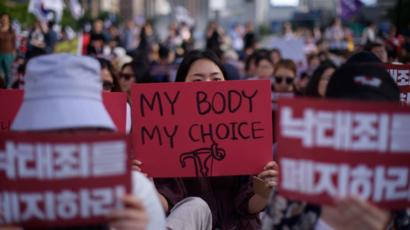
In conclusion, abortion   is a right that every women should  be able to do if they want to because it is their choice , as well as their body . No law should ever ban abortion or make it harder to access . Abortion should be easy to get for every women .It is a problem in our society that keeps being judged because  so many are against it.

***I’m not judging people who are pro-life”****

Sources:

Kaposy,C . ” Improving abortion access In Canada”.Journal Article – research.Retrieved from :http://proxy4.vaniercollege.qc.ca:2083/10.1007/s10728-008-0101-0 

Cummins , C. “Decades later , abortions in Canada are still hard to get”. Policy Opinions.2019 .Retrieved from https://policyoptions.irpp.org/magazines/august-2019/decades-later-abortions-in-canada-are-still-hard-to-get/

Blog 2: Colonization and Global Homophobia

Homophobia is a global issue that is still widely prevalent around the world. Many places criminalize homosexuality due to the fear, intolerance, and hatred surrounding this marginalized group. But how has homophobia become such a wide spread and global issue, and has it always been this way? There is no singular answer to this complex topic but homophobia become a commonly adopted global conception largely because of colonization. 

Pre-colonization, many indigenous communities and African and Asian countries generally accepted homosexuality in ancient times, with some proof going back at least 4000 years in Egypt. In pre-colonial Africa, same-sex relationships can be shown in ethnographic evidence. Later, the European Penal Code system was forcefully implemented and this code criminalized homosexuality. There is also proof of openness towards same sex relations in ancient China within the history of the most famous dynasties dating back thousands of years. Mainstream homophobia made rise in the early Republic of China because of Westernization efforts.

Today, in 71 countries, there and regulations that deem same-sex relations illegal and over half of these countries have been under British colonial rule. British rule is the reason that almost all of these countries have inherited the outlawing of same-sex relations and around 49 of these former British colonies criminalize homosexuality today.

All this being said, it is important to recognize that homophobia was not an inherit or global trait and many post-colonial indigenous communities had functioning progressive societies that were inclusive towards homosexuality and different genders. It is also interesting to see how many of the countries around the world that still have serious homophobic issues are the ones that have been inclusive of same-sex relations post-colonialism.

Sources:

Kalende, Val. “Africa: Homophobia Is a Legacy of Colonialism.” The Guardian, Guardian News and Media, 30 Apr. 2014, http://www.theguardian.com/world/2014/apr/30/africa-homophobia-legacy-colonialism.

Kang, Wenqing. Obsession: male same-sex relations in China, 1900-1950, Hong Kong University Press. Page 3 (https://en.wikipedia.org/wiki/LGBT_rights_in_China)

Westcott, Ben. “The Homophobic Legacy of the British Empire.” CNN, Cable News Network, 12 Sept. 2018, http://www.cnn.com/2018/09/11/asia/british-empire-lgbt-rights-section-377-intl/index.html.