Marinel Sumook Ubaldo

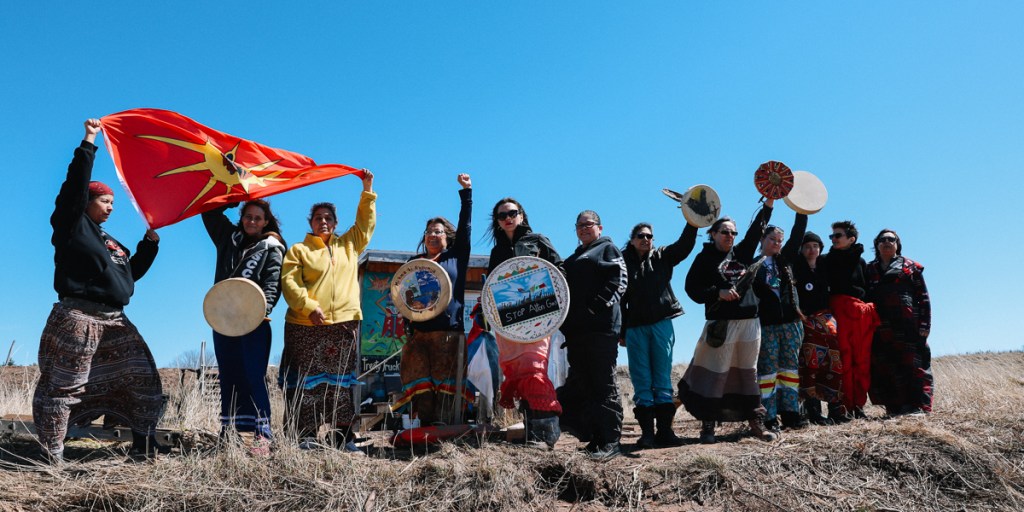
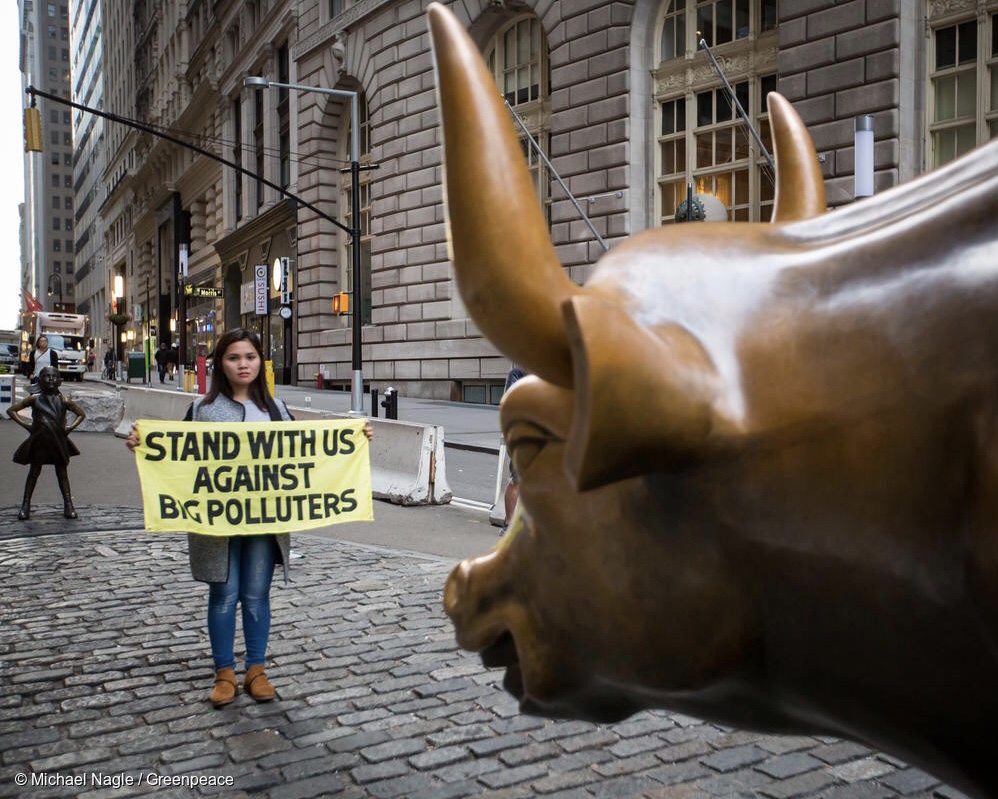
Marinel Sumook Ubaldo is a 22 year old climate change activist from the Philippines. I am like her because we are both young Filipino women whose families have felt the aftermath of natural disasters in the Philippines, but we are different because I have not experienced the firsthand effect of any natural disaster due to climate change in the Philippines like she has. 

She is a survivor of the super-typhoon called Typhoon Haiyan that hit the Philippines in 2013. It was the most powerful typhoon in recorded history. Over 7000 people died and around 15 million people were displaced in the Philippines. This typhoon happened as a result of the climate crisis and many people like Marinel were left with nothing. This experience made her realize that it was her duty to fight for climate action from the Filipino Government to protect her community. She is fighting for the government to provide access to clean water, electricity, and housing. She is also urging governments of wealthier countries, who have contributed the most to climate change, to support the countries that are suffering the most from the dangerous effects of climate change.

Because of her activism, the President of France invited Marinel to talk in front of leaders about climate change at the COP21 conference in France. She has also spoken in front of thousands in New York about climate injustice. This makes her different from me because she has been successful in fighting for her cause in front of world leaders who were listening to her.

I chose to talk about Marinel because I wanted to talk about a Filipino activist since activism is often trying to be silenced in the Philippines. There are many allegations made from Filipino climate activists reporting threats from the military and illegal mining companies. Activists are risking so much to address the climate crisis that has been worsened by richer countries like the United States and Canada, who have used poorer countries around the world as dumping grounds for their garbage. These countries are already in vulnerable climate locations and they are experiencing the worst consequences of the climate change crisis. 

I think Marinel is inspirational because she reminds people to not underestimate the power of the individual. She came from a remote area in the Philippines but she is speaking out about climate change around the world. I define “inspirational” as someone who gives their all to a movement that they are passionate about. Marinel used a traumatic experience to better her community by speaking out and she got people to listen. An inspirational person to me is someone who is uncompromising and determined to implement real change and Marinel embodies that perfectly.

Sources:

“Storming the Wall: Climate Change, Migration, and Homeland Security” by Todd Miller

https://www.globalcitizen.org/en/content/female-activists-saving-planet/

https://www.interaksyon.com/politics-issues/2019/09/25/155301/environmental-land-activists-philippines-greta-thunberg/

https://www.amnesty.org/en/get-involved/take-action/w4r-2019-philippines-marinel-ubaldo/ 
BLOG #4: AOC

Alexandria Ocasio-Cortez, commonly known as AOC, is a hero.

I believe that the U.S Representative for New York’s 14 congressional district meets the criteria used to define heros. In the face of adversity, Ocasio-Cortez has faced all challenges, whether personal or in the public sphere, with great courage, ingenuity and strength, therefore we can check off the technical definition of hero. I believe her to transcend the bounds of the stereotypical, mainstream hero and make of herself a modern heroine, without even trying to. 

Of Puerto Rican descent, a woman, born in the Bronx to a working-class family, Ocasio-Cortez is not the figure of the hero we see in the stories or the media. However, she has built that for herself thanks to her intellect and charisma. A graduate from Boston University in international relations and economics, a former bartender and waitress, the knowledgeable congresswoman fought her way to win one of the most shocking electoral upset victories of the 2018 midterm elections primaries. She did this by starting a grassroots movement that touched the hearts of her constituents and gave her national attention.  Since then, she has been one of the most influential and important voices in the United States congress, and a democratic socialist, badass warrior for human rights, women, people of color and the working-class, amongst many others. 

Alexandria Ocasio-Cortez is a woman who inspires me. Heroes are moral compasses, people to look up to and strive to be like while maintaining our sense of individuality. Heroes, in their paths, inspire us to do better, to follow our ambitions. AOC has inspired me to believe in myself. If she could do it, why couldn’t I, a person with a similar background, achieve my goals with as much courage and dedication as she? In a world where little brown girls from humble beginnings don’t have anyone to represent them, Alexandria Ocasio-Cortez has given us the hope necessary for us to use our voice, and that burgeoning hope that swells in our chest will give birth to the strongest generation of women you’ll ever hear. Are you ready to hear us scream?

REFERENCES:

https://ballotpedia.org/Alexandria_Ocasio-Cortez

https://www.insider.com/alexandria-ocasio-cortez-biography-2019-1

Blog 04: Maria Neira

An inspiring woman to me, is anyone who goes out of their comfort zone to make a change. In this case Maria Neira has done a lot for the environment in terms of tracking process on health and climate change. Maria P. Neira was born in 1962 and is a Spanish physician and international civil servant and diplomat. She is commonly known as the director for the department of Public Health, Environment and social determinants of Health, World Health Organization. She also worked with refugees for “Doctors Without Borders” for those who were underprivileged in Salvador and Honduras. Today she encounters the lengths that society must go to, to protect the environment from climate change. 

Maria Neira is like me in the sense where we both come from European backgrounds and are women with aspirations in life to become the greatest versions of ourselves. Although our aspirations may be different, I believe that when I put my mind to something, I can get it done just as well as she can. Maria Neira is different than me because she has the courage to stand up and voice her opinions regarding the environmental issues. Regarding her accomplishments it demonstrates how she’s a very outgoing person, while on the other hand I’m more reserved. It takes a lot of power to be a great speaker, therefore that’s where we differ. She also has the tendencies to inspire so many individuals all over the world while fighting against making the environment into a better place. She gives the message that she is a powerful and inspirational woman that can influence many into making a change.

I decided to choose Maria Neira simply because I knew nothing about her, and I wanted to learn why she was nominated for being an inspirational woman. I learned how, “Maria has been spearheading the global fight against air pollution as director at the World Health Organization” (Wyns).  In her Ted talk, I enjoyed the way she linked climate change to the simple action of breathing because it reminds people that if the earth becomes over heated, we won’t even be able to do the basic necessities of living. She states how, “Seven million premature deaths a year caused by exposure to the bad quality of the air we breathe,” and that if we want it to stop we should consider, “reducing traffic in cities or investing in public transport and engaging in promoting cycling in cities, investing in renewable energy, promoting cleaner energy for cooking, cooling and transportation and heating are solutions.” I think people like her are crucial to have considering we need someone to look up to when it comes to making the right decisions. 

Ultimately, I seem to find her quite inspirational because she’s knowledgeable on the topic, she has a big heart and takes interest in regarding the health of the environment and of many individuals. She inspires people to make the right decisions and to cut down on bad habits because it only come as drawbacks for the environment and for our health. Due to the fact that she’s persistent in her field, she won the Inspirational women working towards protecting the environment, International Women’s Day Celebration in Geneva, by UNEP in 2016. It takes one person to inspire all and I truly believe that Maria Neira has the power to do so.

By: Julianna Noto 

Reference:

“Dr Maria Neira Nominated an ‘Inspirational’ Women.” World Health Organization, World Health Organization, 14 Apr. 2016, www9.who.int/phe/news/maria-neira-award/en/.

“Maria Neira.” NewCities, 19 Mar. 2018, newcities.org/maria-neira/.

“Maria Neira.” Wikipedia, Wikimedia Foundation, 7 Feb. 2020, en.wikipedia.org/wiki/Maria_Neira.

Neira, María. TED, http://www.ted.com/talks/maria_neira_this_is_your_brain_on_air_pollution/up-next?language=en.

UNFCCC, unfccc.int/climate-action/momentum-for-change/advisory-panel-members/maria-neira.

Blog 3: Gender Equity in Aboriginal Cultures

Based on the reading “Gender and Cultural Diversity in the Early Contact Period”, it can be understood that this article reinforces the point that gender relations vary from one culture to another. This article describes the cultures of both the colonizers (French and English) and the Indigenous cultures the colonizers encountered. Throughout the text, it can be seen that the power exercised by Aboriginal women within their families was unfamiliar and disturbing to the French missionaries since they function based on a patriarchal religious and family system that rested on the God-given authority of men, rather than the Aboriginal societies that function based on the matriarchal system. Therefore, this is one of the main differences between these two communities. One believes that women should take the main decisions, whereas others think men should take the man’s decisions.

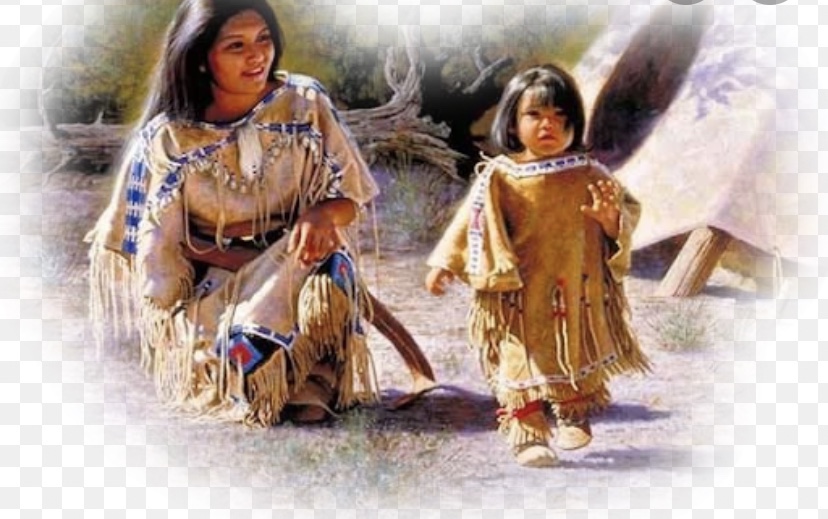
Among the largest group, Mi’kmaq, which were semi-nomadic, the contributions of both sexes were valued equally. The tasks of men were linked to the supply of raw materials. They hunted, fished and trapped. They were also responsible for politics and waging war when required. Women hunted small game and collected wild fruits, in addition to looking after the youngest children. When the men returned to the camp with resources, the women took care of their transformation. They prepared the meat to preserve it, tanned the skins and made clothes. Major leaders tended to be male, but women’s opinions on important decisions affected the group were sought and always respected.
Among the Iroquoians, tasks far from the village were reserved for men. They went hunting, fishing, and trapping, but were also involved in the war, trade, and politics. Decision making requires a larger Confederacy Council among various tribal councils, all of which were made of men; but those men were chosen by the senior women. Women had considerable status and authority. They also transformed the resources brought back by men. In addition to making the clothes and tanning the hides, they had to prepare the food so that it would keep as long as possible. Iroquoians societies were both matrilineal and matrilocal. Women also exercised considerable power in the longhouses, where decisions about its distribution among community members were made by women.

It’s quite clear that men’s and women’s roles are complementary and equally essential in the Aboriginal societies in North America. Unfortunately, our society is not only suffering from social class inequalities but also from gender inequalities being very present.For example, a man and a woman could do the same prestigious job and yet the man will get paid more. I truly believe that women are harmed by gender inequality and putting and respecting both genders at the same level and give both equal powers could be one of the things we could learn from indigenous tribes.

Blog 4: Amal Clooney

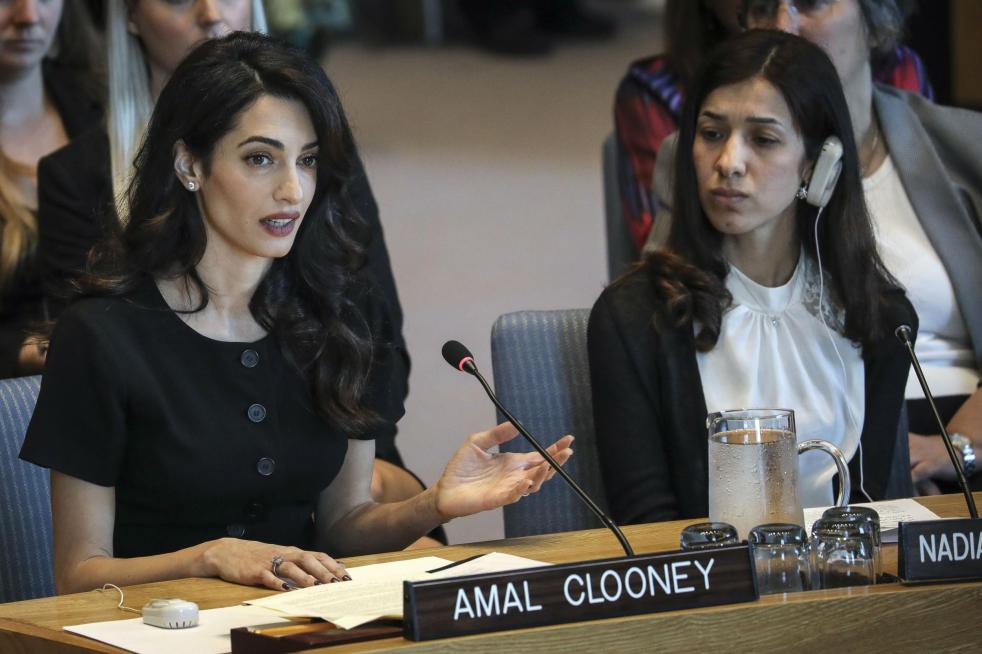
Born in Beirut, Amal Clooney had to move away to Buckinghamshire, at the age of 2, because of the Lebanese Civil War. She spent her whole life after that in that same city, completing her education and submitting to the bar. She attended  Dr Challoner’s High School, a girls’ grammar school. She then studied at St Hugh’s College, in Oxford, where she received an Exhibition and the Shrigley Award. In 2000, Clooney graduated with a BA degree in Jurisprudence. Next, she continued her education at New York University, where she obtained a masters in Jurisprudence. At NYU, Clooney received the Jack J. Katz Memorial Award for excellence in entertainment law. She is qualified to practice law in the United States and the United Kingdom.

Ten years later, Amal Clooney returned to Britain. There, she became a barrister in London (Bar of England & Wales, Inner Temple) at Doughty Street Chambers. In 2013, Clooney was appointed to a number of United Nations commissions, including as adviser to Special Envoy Kofi Annan on Syria and as Counsel to the 2013 Drone Inquiry by UN human rights rapporteur Ben Emmerson QC into the use of drones in counter-terrorism operations. Her passion for law has shone through her work. Clooney has been involved in high-profile cases representing the state of Cambodia, the former Libyan intelligence chief Abdallah Al Senussi, Yulia Tymoshenko and Julian Assange, as well as being an adviser to the King of Bahrain in connection with the Bahrain Independent Commission of Inquiry headed by Professor M. Cherif Bassiouni. Most recently, Clooney was appointed the special envoy on media freedom by the British Foreign and Commonwealth Office.

As a human rights lawyer, Amal Clooney took on many notable cases. For example, Clooney began work on the recognition of the Armenian Genocide in January of 2015. She was representing Armenia, on behalf of Doughty Street Chambers along with Geoffrey Robertson QC. Another example would be her work representing Mohamed Fahmy, a Canadian Al Jazeera English journalist, who, along with other journalists, was being held in Egypt. He was eventually sentenced to three years in prison before finally being pardoned by Egyptian president Abdel Fattah al-Sisi.

Amal Clooney took her career down a different road- in the spring of 2015- by becoming a visiting faculty member and a senior fellow with Columbia Law School’s Human Rights Institute. She was a co-professor with Sarah H. Cleveland in Cleveland’s course on human rights and taught a class on human rights litigation to students in the school’s Human Rights Clinic. She continued teaching for the spring 2018 semester. Clooney taught at Columbia Law School, again as a co-professor with Sarah H. Cleveland, on a core class on human rights. She has also lectured students on international criminal law at the Law School of the School of Oriental and African Studies, University of London, The New School in New York City, The Hague Academy of International Law, and the University of North Carolina at Chapel Hill.

Aside from her career as a human rights and international law lawyer, Amal Clooney has other conquests. Born Amal Alamuddin, she married George Clooney in 2014. In June 2017, she gave birth to fraternal twins. Along with her husband, Amal Clooney founded Clooney Foundation for Justice, in late 2016, to advance justice in courtrooms, communities, and classrooms around the world. Not only that, she also partnered with the Aurora Humanitarian Initiative in beginning the Amal Clooney Scholarship, which was created to send one female student from Lebanon to the United World College Dilijan each year, to be enrolled in a two-year International Baccalaureate (IB) program.

References:

Blog 3 : Gender Roles Back Then

In every culture, their is a “role” for every gender. For example, in the old days, men were in charge of working and they would never be home because they were in charge of “taking care” of the family financially. On the other hand, women had to stay home all day, cook, clean and take care of the children.

Based on the reading “Gender and Cultural diversity in the Early Contact Period”, we can see that when the Europeans arrived in North America, they had a whole different view on genders compared to the Aboriginals. For Aboriginals, men and women were equal. They could all do the same tasks, and nobody had more power then the opposite gender. Indigenous groups were characterized by cooperation, consultation, and sexual division of labor. This meant that everyone had to support each other to get to their goals, like getting food for the village. They also had given tasks to both men and women so nobody would be stuck doing nothing. Work was always divided between sex in these cultures, but it was never unequal. Both of their tasks were important for the survival of the groups. I also noticed that they had “sex- gender systems” that today we call “two- spirits”. This meant that aboriginals believed in having both genders in their body. This really shows that they saw themselves equal to one another. No gender had more power, it was just everyone being at the same level, no matter the sex.They valued gender and the Europeans should have done the same.

 The Europeans had different views of gender compared to the Aboriginals. Men were considered more stronger than women, which should have not been the case because women can do the same things as men.  Although, women were still important in their society. They played a role in the development of education, social services and medical infrastructures. They mainly played a role of how many people perceived women: being a housewife.

This mentality of women being housewives never left our society. Today, it still seems normal and okay for a lady to stay home all day and take care of the children while the husband works. This way of perceiving gender roles should have never existed in the past as it still follows us .

 The thing that struck me the most in the European culture was that marriage was not based on a matter of a personal romantic choice but as a social institution promoted by the state. The wife and the children had to obey to the husband no matter what.   This then followed in the Indigenous culture . The fact that they did not believe in marriage being something romantic is crazy because many people would get married .I believe this is why today some people just don’t value marriage anymore .

Alexia I

BLOG 4: Shailene Woodley

Shailene Woodley has starred in movies such as: The Fault in our Stars, Divergent and the ongoing show Big Little Lies. Woodley was born on November 15th, 1991, making her 28 years old. Not only is she a great actress but she is also an Oceans Ambassador for Greenpeace. 

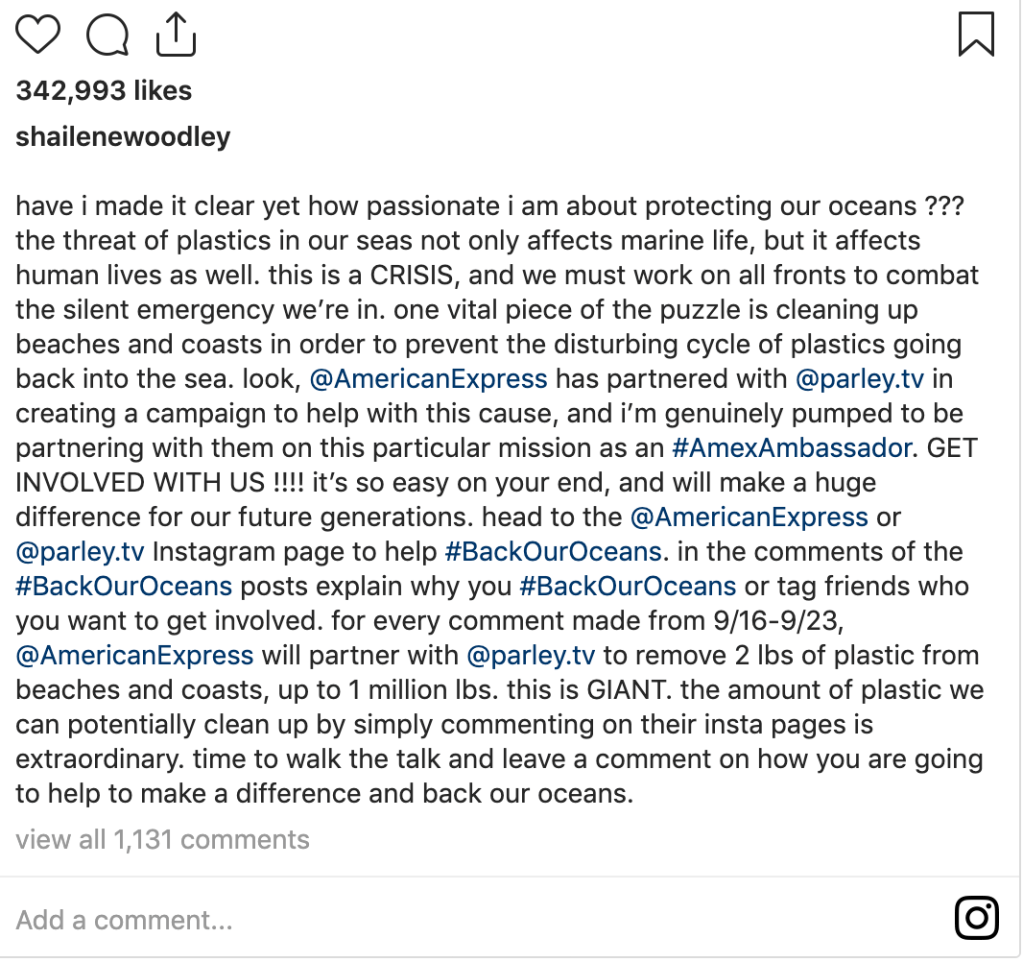
Shailene Woodley has over 4.4 million followers on her Instagram. Making her very open to the public and seen by many different eyes. Woodley uses her social media platforms to communicate her beliefs and opinions regarding the oceans to the world. 

Woodley also created a non-profit organization with her mother called All It Takes in 2010 to empower students to become leaders and to act on their beliefs.

(No Dakota Access Pipeline) Shailene Woodley got arrested in 2016, fighting for the adoption of renewable energy sources. She also highlighted in this protest that native people have been protesting against the pipeline and have not had their voices heard.

I personally find Shailene Woodley like me since I actually grew up to watching her on TV. She at some point in my life was someone I admired. I love the fact that she uses her fame as a way to try and change the world. Shailene Woodley is like me in the way that she is a woman for the betterment of the environment.

Woodley has been very vocal and direct about her support for the betterment of the environment and her personal life. She has admitted to using only chemical-free products for her day-to-day life as a way to cut down on harmful chemicals that can go straight into our ocean water. She states that she actually creates herself all of her own skincare and everyday uses, such as; face oils, moisturizers, cleansers and even her own toothpaste. She also explained that she does not go to doctors for medications, but she rather create her own. She further explains that she makes her own cheese, and goes to a farm to get her own food. She also goes to get natural spring water from mountains every month.

I think Shailene Woodley is unlike me because she has actually acted upon her beliefs. I, on the other hand, have not. I am still trying to educate myself on what I can do to help for the greater good of our oceans, forests and wildlife. Shailene Woodley also is American, and evidently, I am not. Her ethnic background unlike me is plentiful, she belongs to a mixed ethnic background of English, African American, French, Spanish, German, and Swiss. I, on the other hand, am Italian and Irish. 

I chose Shailene Woodley since she is someone most of us have heard of. She is mostly within our age group and I find her someone to look up to. I think that if Shailene Woodley can change her way of life, in this day and age, so can we. I think that Shailene Woodley mainly targets the youth of today, people of her age look up her, she makes herself relatable to people.

I find Woodley inspirational since not every celebrity uses their fame for the greater good. Most celebrities do not use their social media platform to convey strong messages that we need to change the world. When doing this, she obviously does not care what people think about her, she is standing for what she believes in and trying to spread knowledge. 

I define inspiration as something I would like to be or someone that motivates me to be better. And I think that Shailene Woodley does exactly that. 

Shailene Woodley speaking to people about her views and her experiences. This proves that she actually is not only using her instagram to show her support but she will also contribute to social gatherings and rallies in her community.

Resources:

https://www.rte.ie/entertainment/2019/1111/1090073-6-celebrities-championing-climate-change/

https://gossipgist.com/shailene-woodley-biography

https://www.biography.com/actor/shailene-woodley

https://www.teenvogue.com/gallery/shailene-woodley-best-activist-moments

Blog 4: Ellen Page

Ellen Page is a very inspirational woman. She is a Canadian actress, producer and activist.  She was born on February 21st, 1987, and raised in Nova Scotia, born to her mother who is a teacher and father who is a graphic designer.  Ellen page has been in a few movies you may know such as Juno, Inception and X-Men: Days of Future Past. Ellen Page has recently become more of an active participant in climate and environmental activism.

Furthermore, in her most recent work, she travelled to her home town and surrounding areas of Nova Scotia to shed light on a problem called “environmental racism.” According to Kaitlyn Mitchell, environmental racism is used to express, “the interconnectedness of environmental health, socio-economic conditions, and racialized discrimination.” This means that there is discrimination against a minority group in an environmental context. A popular example would be if one would dump their toxic waste near a poorer African American community just because they are poorer, compromising their health. In context to Ellen Page, she went to Nova Scotia to make her documentary to make known many problems in the area and features minority communities trying to get money for a huge clean-up of major water ways such as the Boat Harbour in which tonnes toxic waste is being dumped into it.   Also these communities are fighting to stop the construction of a huge dump as well as the construction of a natural gas storage facility. All of these negative actions are seriously affecting the environment, including the contribution to climate change and many other gravely important aspects of life. Not only is it impacting climate change, but also the health ocean wildlife, the health of everyday people, and also animals.

Ellen Page is appropriately using her platform to inform and make known these events to help make instill change and make progress to halt climate change as well as aid in the end environmental racism. This documentary was shown in the Toronto International Film Festival in 2019 which I think is amazing. Ellen Page is very inspirational and a woman that we all should look up to.

Link to trailer of documentary: https://www.youtube.com/watch?v=nKhIYFDnCoY

Resources:

-https://www.intechopen.com/books/water-challenges-of-an-urbanizing-world/water-pollution-effects-prevention-and-climatic-impact

-https://time.com/5669038/women-climate-change-leaders/

-https://news.trust.org/item/20190907083555-tdk8h/

Blog 3: Changing Cultures

The opening anecdote shows a French missionary astonished by the fact that women have so much power in an aboriginal society. It shows how our worldviews and cultures affect the roles of each gender for each society. In New France, for the Catholics, men had a god-given right to be the more powerful gender which gave them most, if not all, control on the women in their lives. That anecdote ends with the Jesuits telling the aboriginal man that men were the masters and in France, the women do not rule the husbands. This shows not only how colonization affected certain cultures with the arrival of new thoughts but also how we view our own worldviews as the “right” worldview more often than not.

Every indigenous group had economic activities that stemmed from what environment they lived in. However, most groups were hunter gatherers. The Mi’kmaw society were egalitarian, something found commonly in hunter gatherer groups. Very interestingly, they also had governmental structures that away laid beyond just the level of the individual. The Innu had a sexual division of labor even with food. Yet, these divisions played as complementary parties and both parts were essential for the group. The men hunted large game and the women, the smaller game, and yet its known that the women’s game provided more than half of the food supply for the community. I also found it really striking that both men and women had the right to become shamans. It’s very well known that the religious beliefs in animosity are strong in indigenous groups, and for women to hold the same influence as men in the domain of the supernatural and the natural shows how important and respected women have been for indigenous tribes.

Iroquoians not only matrilineal but also matrilocal. Men were expected to go and live with the families of their wives as the women were in charge of the longhouses and the distribution of food supplies among everyone. The more I read about these different ways of living, I noticed similarities and differences with our Western culture. Nowadays, some women still take care of the finances in their households even if the man might be the breadwinner. Sadly, it’s quite clear that our societies are very far from egalitarian, not only because of social class inequalities but also from gender inequalities being very present. A man and a woman might do the same high paying, prestigious job and yet the man will get paid more. Of course, women who’ve been following the more Western traditions have gained much more liberty and rights like voting, right to divorce, etc, but I truly believe we have along way to go. Women in the US now are facing troubles with the right to get legal abortion being under threat. Overall, I think we could learn a lot from indigenous tribes that don’t put women above men, but rather at the same level.

Oral: Vandana Shiva

Climate change has been an issue that many have marked as severe and some have decided to disregard it. Many individuals have already found themselves dedicated to making an impact on the current climate state. Out of many, Vandana Shiva is an environmental activist born on the 5th day of November 1952 in India. Despite being born in a developing country, she had access to education and the will to pursue it to the limit. In 1972, Vandana graduated with a Bachelor of Science degree at the Punjab University in Chandigarh. That was not her limit, in 1977, she then travelled to Canada to obtain a Masters in the philosophy of science (University of Guelph) in Ontario and a Ph.D. in philosophy at the University of Western Ontario. Possessing the same nationality as me, she returned to her country of birth, India to continue her studies in interdisciplinary research in the fields of environmental policy, science and technology at both the institutes of Science and Management in Bangalore, Karnataka.

Back in her homeland, Vandana Shiva, influenced by her interest in human rights and environmentally friendly ideology, created the Research Foundation for Science, Technology and Ecology[1] which is focused on protecting people’s rights and the conservation of biodiversity. Soon, Vandana became the author of many books but I have found two particularly interesting: the Alternative Nobel Peace Prize winner: Making Peace with the Earth[2] and Soil Not Oil[3]. Making peace with earth focuses on the impact on the environment by corporate capitalism[4] and the quest for power by large businesses. Soil Not Oil explains the dangers of society focused on industrialized agriculture. In one of her articles summarizing her book[5], she wrote: “A one per cent increase in soil organic matter can increase soil water holding capacity by 100,000 litres per hectare, five per cent can increase it to 800,000 litres. This is our insurance against climate change, both when there is drought and too little rain, and when there are floods and excess rain. On the other hand, cement and concrete increases the runoff of water, aggravating floods and drought”.

The number of books she wrote and her nationality caught my attention. I find it inspirational that despite being born in a developing country, she achieved such an education, travelled to gain even more knowledge, came back to the country she was born in because she felt it was unguided and finally devoted herself to making a change in the world. She made numerous books that reflected her ideology and her knowledge while explaining the real problems that are affecting all of us. I find it inspirational that such a woman decided to write about these problems and giving written, a detailed explanation about the environmental issues the world is facing, not many, especially born in a country where education is limited and most of its population resides in poverty decide to talk about these issues that some consider trivial.

Indian environmentalist Vandana Shiva: The fight for climate justice: https://www.youtube.com/watch?v=3bcT_b5luL0

Source:

  1. https://www.eldis.org/organisation/A6564
  2. https://www.plutobooks.com/9780745333762/making-peace-with-the-earth/
  3. https://www.northatlanticbooks.com/shop/soil-not-oil/
  4. https://www.worldatlas.com/articles/what-is-corporate-capitalism.html
  5. https://www.commondreams.org/views/2015/04/23/living-soil-lies-solution-climate-change

https://en.wikipedia.org/wiki/Vandana_Shiva

https://www.countercurrents.org/shiva230211.htm

https://www.aljazeera.com/programmes/upfront/2019/12/indian-environmentalist-vandana-shiva-fight-climate-justice-191228004940555.html

https://yourstory.com/herstory/2019/09/women-activists-climate-change