“How to Get Away with Murder”: Feminism, Intersectionality, and Representation

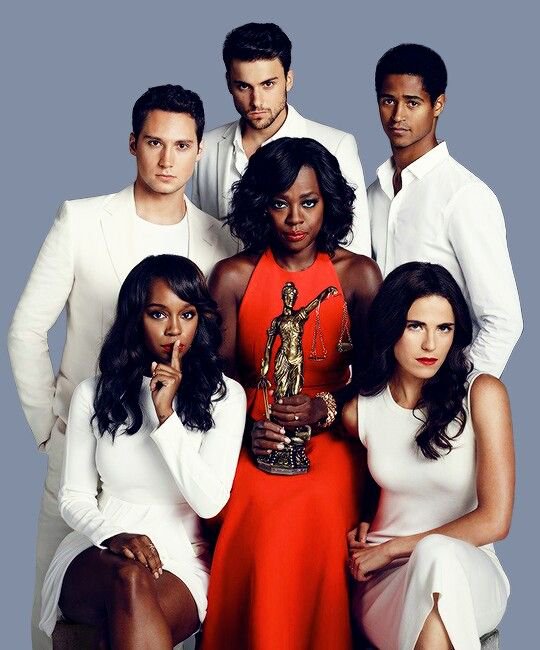
The television series called “How to Get Away with Murder” covers so many topics that were explored in this course which is one of the reasons it is one of my favourite shows of all time. As an aspiring lawyer and law television show enthusiast, this show was wonderfully executed and the representation and diversity in the show made the show earn its top spot as one my favourite shows. The main cast consists of 4 queer characters (3 of them being people colour) and 4 women of colour. I love that this show gave many people the opportunity to see themselves represented when they are often left out of mainstream media.

Annalise Keating is main character, played by Viola Davis, and Annalise is a bisexual dark-skinned black woman who is a practicing lawyer and law school professor. The head of Annalise’s law firm, Tegan Price, is an Afro-Latina lesbian who finds solidarity with Annalise as the only women in their entire law firm. They are hardworking and uncompromising, and they support and empower each other when they could easily be petty and competitive towards each other as ambitious women in the field of law. The trope of women competing against each other instead of uplifting each other is something I’ve seen often, so it was nice to see this wholesome, respectful, and supportive bond between Annalise and Tegan who are extremely powerful and competent women in a field that is dominated by men.

Annalise is a successful lawyer who brought a case about justice system reform (in regard to racially biased incarceration and low funding for public defenders) to the Supreme Court. She did this with the help of Olivia Pope who is another black female lawyer from the television show “Scandal” — another one of favourite law shows with a powerful black female lead. This is a huge accomplishment and many people told her that she could not accomplish anything with this case and many people tried to stop her, but Annalise was uncompromising and dedicated to justice, and she went through a lot to bring her case to the highest court in the United States. This was so inspiring to me as a young woman of colour and this show actually sparked my interest in law. The show through Annalise’s eyes reflects and intersectional point of view as a black queer woman in the United States and bell hooks covers the same topic of intersectionality in her texts about feminism.

“How to Get Away with Murder” has multiple seasons but one of the topics it covers is targeted physical assault against gay men. It also showcases the experience of a Pakistani refugee with the threat of persecution for being gay. Also, Annalise gets threatened and targeted for being successful, being black, and being a woman who excels in the field of law. The show also explores Annalise’s internal conflicts about her sexuality. The show takes the opportunity to talk about certain topics and experiences from Annalise’s intersectional point of view as a woman. Intersectionality is a topic that was covered by bell hooks when talking about feminism and the female experience. Annalise also takes sexual assault cases, and this raised awareness for young girls that are targeted and the victims that do not get justice in real life.

I also had to shout out the fact that they portrayed a healthy homosexual relationship between 2 male members of the main cast, one of them being an HIV positive Filipino man. This is unlike any type of representation I’ve seen in mainstream media anywhere and I’m so happy and proud to see this type of representation in a popular American television show that actually has a good plot.

I have such a deep love and appreciation for this show and I’m sad it is ending after I’ve invested myself into this show for 6 seasons, but it’s truly an amazing show that covers so many important social issues related to gender, race, and sexuality while having a talented cast and an incredible plot.

Here is Annalise Keating’s speech at the Supreme Court and Viola Davis’ amazing acting:

Blog 5: Masculinity

Masculinity is a topic that has been debated in our society fairly often. Many wonder what it means to be masculine, and if we could even assign a definition to such a one-sided term. Men are primarily and secondarily socialized into believing certain characteristics (assigned by our culture ) are definitive in determining their manliness and masculinity. These characteristics range from not crying when they get hurt to being and playing violently.  

In “Masculinity as Homophobia “by Michael Kimmel, the author explains how homophobia is the basis of our social definition of “manhood”. He argues that American men are socialized into a very rigid and limiting definition of masculinity. He also states that men fear being ridiculed as too feminine by other men and this fear perpetuates homophobic and exclusionary masculinity. Men are scared to act “sissy”publically because if they will be doing so , they would be considered a “ faggot””. Therefore, the fear of being sissy dominates the cultural definitions of manhood. Men are scared to act, talk a certain way, they are scared to dress, in fear of being perceived as gay, and not as a real man. In my opinion, this is often an issue that happens for many men since it leads them to think that they aren’t masculine enough because there are certain “characteristics” to meet for you to be masculine enough. Men are forced to hide their feelings and become and remain emotional cripples which imprisons them by a system that undermines their mental health. When the author mentions “ Think, for example, of how you would answer the~question: How do you “know” if a man is a homosexual? When I ask this question in classes or workshops, respondents invariably provide a pretty standard list of stereotypically effeminate behaviors. He walks a certain way, talks a certain way, acts a certain way. He’s very emotional; he shows his feelings. “ Reading this, I had understood that manhood is socially constructed since we are socialized into this system and most of us learned about those “ gender expectations” in our family of origin, that are usually taught to us by our mothers. They were also reinforced in schools and religious institutions. In my opinion, each gender should act the way they want, dress the way they want, etc , and the way they eat, act, talk, walk, etc should not define their gender.

In “Understanding Patriarchy “by Bell Hooks, she talks about the definition of patriarchy. Patriarchy is the single most life-threatening social disease assaulting the male body and spirit in our nation. Hooks also defines that patriarchy promotes insanity. It is at the root of the psychological ills troubling men in our nation. Throughout the text, she gives many examples of situations that she had lived through with her brother because of the concept of patriarchy. Her brother was taught that it was absolutely his role to be served, to provide, to be strong, to think, he was taught that his value would be determined by his will to try and do violence, he was taught that a boy shouldn’t be expressing feelings, etc. What struck me the foremost is when she was explaining the traumatic even that she had to go through just because she wanted to play a game with her brother where marbles where involved. Her brother told her that it was a boy’s game, but she still insisted. This brought her to get beaten up by her father because she’s “just a little girl” and can not do what boys do. The fact that a young girl can’t play a game because of her gender, as if the game was made only for one specific gender is very absurd. 

The definition of masculinity should change since it has denied males access to full emotional well-being and is imprisoning them in a system that undermines their mental health. It also brings social issues like racism, homophobia, and sexism, and until we will collectively acknowledge the damage the patriarchy caused and therefore the sufferings it creates, we will not address male pain. As a nation, we must be willing to reveal the tough reality that the patriarchy has damaged men within the past and continues to break them within the present.