
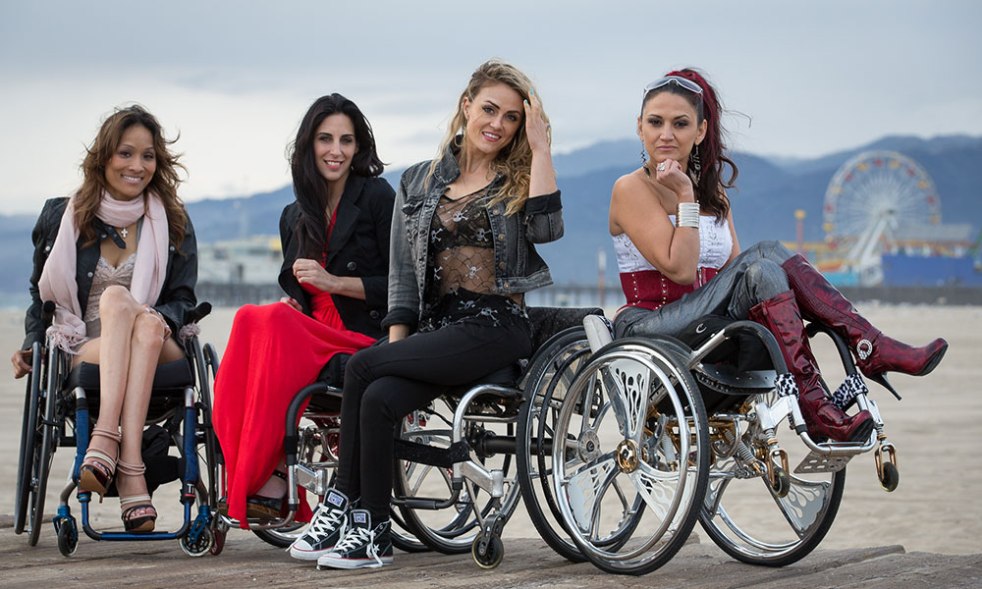
Bringing light to Disabled Women

On March 7, I attended “The Disabled Women’s Network: Bringing the Intersection of Gender and Disability to Light”. The speaker was Nelly Bassily. She is the director of DAWN (Disabled Women’s Network) This network focuses on girls and women with disabilities and their rights. Nelly also lives with anxiety, depression, chronic pain and post traumatic symptoms which is why it is important for her to show a light on people who deal with disabilities.

She first started by asking the audience “what first comes in your mind when you hear the word disabled?” At first, the audience did not have much to say, then one guy answered “wheelchair”. When thinking of disability, many think about someone in a wheelchair. The speaker discussed on how a lot of people have ONE image on disabled people. They think “oh this person probably can’t walk”. Nobody ever looks at the mental part of a disability, the physical side is always looked at. Most of the times, mental disabilities don’t even show. This is why we only have one image in our head when we think of disability. The speaker then asked another question “What do you guys feel when you see someone disabled?”. Most students said that they think of someone who needs support from someone else. As the discussion was going on, I started to understand that even I, myself should not have   pity for someone when their disabled. It isn’t right and they don’t always need that extra support just because their disabled.The audience wasn’t as active than I would have thought. It wasn’t a full audience and the same answers were getting repeated, but I still enjoyed the event.

The key message from Nelly was really that women and kids always portrayed in a certain way because they have a disability. Our society has to be aware that these kinds of discrimination are terrible because they give a different image of what is it having a disability.  The event changed my perspective on disabled people and I feel that every student should go to these kind of events to know more about the subject.

Blog 3: Gender Equity in Indigenous Cultures

There was a visible contrast between the European and Indigenous culture when it came to their gender relations. Unlike the Europeans, the indigenous people were matriarchal and lived an egalitarian society meaning everyone had equal rights and opportunities. In the Indigenous culture, everyone has an important role that will in some way benefit their community. While the men do more of the hunting, women make a lot of important decisions-making when it comes to their lives and well-being. They are also more open when it comes intimate relationships before marriage and the term “two-spirit” which is when both genders are in one body. 

            In the European culture, men were seen as always in power while women were looked down upon and considered less important. The men in the women’s lives were always the one to make decisions for them or in general. Regarding marriage, it was not a personal choice people got to make but more of an obligation in society in order to have a status and later on children.

Both of these cultures can relate in some way to our contemporary western culture. The Indigenous culture is similar in the sense that both men and women play an important role in our society when it comes to daily affaires; from job positions, to household responsibility and financial situations. While there has been a vast improvement in our society between men and women, there are still major barriers that we have not overcome which is where our contemporary western culture is also similar to the European culture. Women are still seen as less than men which is a growing issue in our society.

            The aspect of the Indigenous culture that struck me the most was how open they are about their view on lgbtq+ viewpoints in their society and the term of being “two-spirited”. No matter what, everyone in the community is viewed as equals to one another which I believe creates positive environment and should be something we do in our community as well.

Blog 3

At the beginning the author’s opening anecdote was to show the role of women in a specific culture. As people tend to have the idea that women only recently gained power within society, which is true if looking at our specific culture. Which is why the authors point is to demonstrate that women actual had power in the sixteenth century and it was completely normal in the aboriginal society. It also shows how advance their culture was compared to the Europeans, as mentioned, women didn’t have any power, adding to the shock Europeans had when they found out that in that specific period of time women had a great deal of influence over men.

In the aboriginal societies men and women had different roles along with having a better sense of understanding when it came to equality compared to Europeans. Along with that they had a better acceptance about premarital relations and sexual orientation. Taking that into consideration, it is just to say that aboriginal societies where more advanced in their thinking and open minded as people tend to be in today’s day.

In the Innuit society, it would be considered the most related in practice to our modern-day society. As men in women had roles yet they each had their own important roles, but at the end of the day men and women’s decisions and opinions were equality as important. Which can be said about our society, as we tend to still have certain specific roles, although both genders opinions matter when making decisions. The society that tends to be the least related to ours would be the Mi’kmaw, as men would hunt, and women would do the agriculture and take care of the children. Although women had a certain degree of power, the main leaders were men. Which in today’s day, we have a lot more women as leaders.

Two spirited identities we people who had both female and male identities in one body. As if they were men bodied individuals the would wear feminine clothing and vise versa. Along with they had important roles in society, as they were “healers, seers, and bearers of oral tradition.” The difference with two-spirited peoples and the LGBTQ+ is that they held specific ceremonial roles of the two spirited community. While the term can only be used by a first nations person, or else the term wouldn’t make sense.

As mentioned, women in aboriginal societies were more advanced as their opinion and voice mattered in their community compared to the Europeans. As Europeans men had all the power over women, whereas the aboriginals it was either equal power or women’s opinion had a great influence on men.

As colonization progressed, Europeans took more and more land leaving the aboriginals with almost nothing. Along with the abuse brought upon them, from the alcoholism to the kidnapping of their children to attempt to change who they are has had a large impact on aboriginals. To this day the abuse done to them still continues as an example that they’re many of them who still don’t receive clean drinking water. Which is to show how till this day aboriginals are still being negatively affected by colonization.

Blog 2: The Issue of Beauty Standards

In today’s society, the idea of beauty has been getting more distorted by socially constructed ideas, rather than what is truly is. Starting from a very young age, women and men are told that they have to have the perfect body, have no acne, have curves, be muscular, and so much more. This tremendous amount of pressure put on young children that sadly carries on into their teenage years and adult life is terrifying. Children should know that whatever shape and form their body is, is perfect. No makeup company or modelling agency ads should tell them otherwise. 

With the help of companies that show off women and men’s ‘true’ beauty, it impacts the children’s brain into thinking that they have to look like that in order to be considered perfect. With models advertised everywhere, always in the same body shape, it provokes some children to bully others that don’t fit the criteria of what social media claims to be the perfect body. With the issue of beauty standards everywhere, it causes children to become extremely unhappy with their appearance for no reason, which can lead to many health issues like eating disorders, anxiety, depression and more. 

Children should not be taught at a young age that they should have the perfect body, just like the models advertised everywhere, or they are not considered to be pretty. Children should be able to spend their childhood having fun, making new friends, playing on the playground at school. They should not be worried about whether they are considered to be pretty, or if they have the perfect body with the right curves where they are supposed to be, or if they have enough muscles in order to be viewed as being beautiful.  

 Some beauty companies have started including models in all shapes and colors for their ad’s, which is a start at ending the horrendous beauty standards. On the other hand, there are some companies that keep the same criteria they have been putting out and disregard the harm they are doing to young girls and boys. 

references:

https://www.breezejmu.org/grit/societal-beauty-standards-can-cause-health-problems-for-women/article_7dc1f436-f4ed-11e8-b4c2-cf067635cc04.html

https://www.mic.com/articles/111228/how-western-beauty-ideals-are-hurting-women-across-the-globe

https://www.huffpost.com/entry/heres-why-society-has-unrealistic-beauty-standards_b_5a09bb8ee4b06d8966cf3172

https://www.girlspring.com/society-and-unrealistic-beauty-standards/?gclid=EAIaIQobChMIx7XtpYyM6AIVyuDICh1ZYQ5QEAAYASAAEgIFTvD_BwE

Misogyny In Hip Hop Music: Blog #2

by: Julia Shukhman

To begin, I think we can all agree that music is a part of our daily lives. We are often so mesmerized by the beat, and as a result, we don’t pay attention to the derogatory and disrespectful lyrics, mostly towards women, that these songs contain. The hip hop and rap industry is known for its lack of respect towards women, yet we do not realize how misogynistic some of the lyrics actually are. For example, in Dr. Dre and Snoop Dog’s 1992 hit “Bitches aint shit”, Snoop Dog has a verse where he says “Bitches ain’t shit but hoes and tricks, lick on these nuts and suck the dick, get the fuck out when you’re done”. In other words, he is implying that women are nothing but objects that he uses for his personal pleasure, and that he leaves when he is done with them. Not only that but the name of the sing itself “bitches ain’t shit” is extremely derogatory and disrespectful towards women because he refers to women as “bitches”, meaning dogs. We need to pay more attention to the songs that we listen to because they often glorify and normalize the sexual objectification of women. An example of women objectification is in hip hop music videos where women are mostly used as an accessory for men. For example, women are always kissing on the men while they are singing or rapping, and they are usually naked or barely have any clothes on. They are also filmed doing sexual things like sucking on lollypops, or dancing while having water sprayed at them to fulfil men’s “fantasies”.  

Men should instead use their musical platforms to encourage and show respect towards women, not belittle them. “Along with the major studies conducted, misogyny in rap music creates a different mindset among people. For example, children who grow up listening to misogynistic music may grow into feeling comfortable with talking to women in a manner that affects the way they might treat women in the future.” state Gourdine and Lemmons’s 2011 study. This proves that when people are constantly listening so music that contains disrespectful lyrics towards women, they start to think those thoughts too which is horrible and why all of these horrible lyrics have got to stop.

Sources

https://en.wikipedia.org/wiki/Misogyny_in_rap_music

https://genius.com/Dr-dre-bitches-aint-shit-lyrics

Blog 1: Trying to define Feminism

Jessica Valenti and Bell Hooks each have similar but different views on feminism.  They both find it essential to promote feminism, however they have different definitions on what feminism means to them.  Bell Hooks is a well-known writer, educator and activist. Her books emphasize her view on racism and gender roles in today’s society. Jessica Valenti is an American feminist writer. She was the co-founder of the blog, Feministing, which she worked on for seven years. Bell Hooks and Jessica Valenti are both strong feminist that believe that women should be able to be comfortable in their own skin and  have the same rights as men. 

            In the article by Bell hooks, she first describes her interactions with people who try to define feminism. She adds that her view of feminism is not angry women trying to be like men, but it’s more of women trying to gain equal rights. She focuses more on women needing to have equal rights in society and the issue of sexism. On the other hand, Jessica Valenti writes more about how women should feel good about themselves and have self-respect. Jessica expresses how feminism should allow society to see through the nonsense that would make people believe there is something wrong with them. A similarity between them is how they are strong advocates for feminism and want to enforce the idea of feminism to everyone they possibly can, in order for women to finally have equal rights to men and feel confident in their bodies. 

            Something that stood out to me while reading the two articles was how Jessica Valenti mentioned that people find feminism is becoming out-dated and not as important anymore. This section of the article was really interesting to read because I was not aware that majority of people on the media have mentioned how feminism is considered to be “dead”, since no one speaks about anymore. She also mentioned how society thinks that since there has been no big movement lately, that would probably signify that feminism has reached its peak, or that feminism is dead. This whole statement that she has heard from people really shocked me because I know that there is still more work to do in order to improve equal rights for women, but that some people think that feminists have succeeded in doing what they were intentionally trying to do surprises me. 

Blog 2: Beauty Standards

Social media is a big part of our society and is one of the biggest platforms where women and young girls get their view on how women are supposed to look like. The appearance of a woman says everything about her according to society. Society wants women to have a curvy body with a thigh gap, a small waist, luscious lips, no cellulite, big breasts and a big butt and the list goes on and on. It doesn’t help that celebrities are being praised for their bodies when no one actually knows what they get done to look a certain way. Many women believe that by achieving the look portrayed by celebrities and models, it will make men want them more. The fact that most women will do things to change their appearance for the approval of others and not themselves is very alarming. This creates extremely negative and toxic expectations for women.

There’s an increasing amount of pressure for women to look a certain way that is accepted by everyone. Young girls and women will go to certain extremes in order to achieve these beauty standards that they think will make them more accepted by everyone. Some will turn to eating disorders while others will turn to plastic surgery to change their appearance. According to the American Society of Plastic Surgeons, “since 2000, overall procedures have risen 115 percent, but the types of procedures patients are choosing are changing.” This just goes to show the need to look “perfect” no matter the circumstances, is a risk women are willing to take just to be able to please society’s view. Since girls/women are always exposed to these so called “perfect” bodies on social media, they are getting the wrong image and only becoming more and more self-conscious about themselves and have a lower self-esteem.

There is a serious lack of diversity in our society today. Not only body wise but also when it comes to race. This is something more people need to realize in order to change our views for the better. So many women on social media look similar to one another that people start believing that is how you are supposed to look. Its unhealthy for women to constantly be exposed to this notion of beauty. As a society and a community, we need to realize how being different from others is just as beautiful. We need to change these unattainable beauty expectations and be more open to diversifying our society’s view on women.

References:

https://www.plasticsurgery.org/news/press-releases/new-statistics-reflect-the-changing-face-of-plastic-surgery

https://www.girlsempowermentnetwork.org/blog/media-today-unattainable-beauty-standards

Blog 04: International Women’s Week

On Tuesday, March 3, I attended The Importance of Collective Care in the Helping Profession by Anuska Martins. Her presentation was very powerful because it’s something that a lot of people go through on a day to day basis. She spoke about Intimate Partner violence (IPV) and about the ways to help those who are in danger. She stated how it can happen to normal couples that don’t necessarily expect it to come. She also mentioned how there’s many different types of IPV and how some people don’t want to admit that they’re in danger, so they result to being in denial. Her Key message was to ultimately inform people to keep their eyes open to danger even from a loved one in order to save them from violence. 

Anuska mentioned the shelter she works at for the safety of many women. She explained the significance of the shelter that it purposely looked like a house in order to not draw attention and to keep the women safe. The women in the shelter would receive support and advice from the professionals there and the shelter could hold up to nine women and their children for up to three months at a time. 

This presentation made me think differently about the views on intimate partner violence because of how dangerous and scary it is. It’s so unfortunate that so many people are victims to violence due to their partners. I think that it’s crucial to always keep an open mind to the possibilities of danger even though it may be the person you love. As Anuska mentioned, it can happen to anyone. 

To conclude, Anuska explains it’s important to always help others, but also to not forget about ourselves. We forget sometimes we’re all people, we all get tired and need breaks. I would definitely recommend this presentation because it taught me so much about something I didn’t really dive into before. 

On Thursday, March 5, I visited the auditorium for international women’s week and learned about Art in Response to Backlash presented by Sonya Stefan. Her presentation was very interesting, but not what I had imagined. Throughout her entire presentation she provided lots of videos and pictures about the things that took interest in her life. Sonya Stefan is a dancer, curator and filmmaker who embarks herself in many clubs. The first one is, La Lumiere Collective which is a mini cinema where people can share their films for a very low price to one another, Telepresence where she collects old surveillance equipment to make her films, Kids Pop where she provides many services for young children and families and lastly, Lux Magna which is a celebration of culture and arts. 

Many other students and I enjoyed her presentation, but we began to question what the connection between her passion for art, dance and film to International Women’s week was. She then gave her key message which was that her work is based on body, and with that comes a lot of complication to women. She said how she grew up hating her body and only after age 35 she began to love herself due to her expression of arts. She mentioned also how dance was an industry where a lot of women had to shut their mouth and obey, therefore exploring dance in a healthy way really inspired her to be the best version of herself. 

Her presentation didn’t really make me think differently towards the struggles that women must go through, but it did inspire me. I adored the way Sonya challenged many negative aspects into positive because of art. 

To conclude, Sonya did add that her definition to feminism was someone who is honest, open and willing to learn. She said how she was born a feminist and would probably die one as well. I would recommend her presentation to a friend, because it showed me how there’s so many different ways of being an inspirational woman. 

By: Julianna Noto

Blog 1: Defining Feminism

The feminist movement should be viewed in a more positive and powerful way than it is now. Our society doesn’t necessarily understand the true meaning of what being a feminist is, which is why it is such a controversial topic and causes many people to have a false sense of its significance and see it negatively. After reading their articles, we can agree that Jessica Valenti and Bell Hooks both shared similar thoughts and opinions on what feminism is. It is about empowering women and standing up for what they believe they deserve in all aspects of society (social, political, economic, etc.). Both authors explain how feminism is not about being “anti-male, anti-sex”, but rather about having equal opportunities and respect for one another. Many people have trouble grasping this point in feminism. 

In Jessica Valenti’s article, she expands more on the issue of how there are many stereotypes about what people think feminists look like when in reality women should be able to express themselves freely and not have to follow certain norms in society. Valenti believes that feminism is about “making your life better”. As women, we often experience situations where we are made to feel as if we are not good enough or not worthy enough. Being able to see through that and realize we are, can help us feel good about ourselves and learn self-respect. On the other hand, Bell Hooks focuses more on the issue of male domination and ending sexism. She shows how feminism essentially challenges the thought of male domination by fighting for our rights and standing up for ourselves. While they talk about this topic from different viewpoints, they are both conveying the same important message about bringing awareness to this topic. I believe it is important for these authors since it’s time to change the way people view feminism. They have grown up and lived in a society that has degraded women for so long that it is time to change this way of thinking.

While reading these two articles, many things they mentioned were very eye-opening for me. One of the biggest things that struck me was in Jessica Valenti’s article when she was explaining how the worst thing a guy (or anyone) can be called is a girl when it comes to insults and so on. It made me realize how often I have witnessed that in school or between a group of people and not understanding the true meaning behind their words. 

I have always understood the true and important meaning of feminism, so reading these articles didn’t change anything for me when it came to the definitions. Although, reading these articles did give me a lot more knowledge on things I didn’t think about before and made me realize how many problems women face on a daily basis which was very eye-opening for me.

Blog #3: gender equity in Indigenous cultures

Indigenous and European cultures were very different when it came to gender relations. The indigenous lived based off of an egalitarian society where women were just as important as men and shared fairly essential everyday duties. The Indigenous are more open minded about premarital sexual intercourse and two-spirit individuals (person who identifies as both female and male). On the other hand, the Europeans believed that men had the upper hand in everything and were superior to all women. They had the mindset that women were inferior, therefor stayed home and did the bare minimum. Premarital sexual intercourse was not even spoken of because it was an inappropriate topic for Europeans that shouldn’t of even been thought of.

The Indigenous society is very similar to our contemporary Western culture because we share the appreciation of both women and male tasks that are completed daily. In both cultures, men and woman are very much needed to fulfill important tasks. In today’s society, as much as we think genders are finally seen as important figures, there are still defects when it comes to trying to keep the equality of genders while the indigenous never had these issues. In this case, we would share a similarity with the European culture where women are not getting enough recognition.

The Europeans were very amazed and shocked when they encountered the indigenous because of how clever they are to identify male and females as equally relevant as one another and see no reason to discriminate one gender from another. Over the recent years, I clearly realized that woman are taking a stand and proving their point across that both genders are just as equally needed in the work force, political world and so on…