
Blog 5: Masculinity

Masculinity is a word that many people struggle to define, or they think they know how to define it but only from their own view point and struggle to accept other definitions. The word in itself is a label and often through stereotypical viewpoints causes many emotional harm to many men and women who define this word in a different way. The stereotypical way to define masculinity is the image of a macho man, enjoys cars and dangerous sports, money, gorgeous women and dresses very “heterosexually.” This is a very inaccurate image. Bell Hooks, feminist and social activist, and Michael Kimmel, American Sociologist, talk about masculinity and the label and social constraints this word gives to many men as well as the patriarchy which subscribes to the stereotypical masculine point of view.

In Bell Hooks essay titled “Understanding the Patriarchy,” she talks about how the patriarchy is not only systematically damaging to women but also men, “Patriarchy demands that they [men] become and remain emotional cripples. Since it is a system that denies men full access to their freedom of will, it is difficult for any man of any class to rebel against the patriarchy, to be disloyal to the patriarchal parent, be that parent female or male.” In this passage Hooks explains that the patriarchy is damaging to men because it restricts their access to talk about their emotions and hard to want to fight against it, especially against parents that subscribe to patriarchal view points. In these cases men become emotionally detached and sometimes causes many problems in the future for their mental health. Hooks explains that to properly fight against the patriarchy and allow men to become “liberated” from this social system is to name the problem and acknowledge it to end it. This is easier said than done.

Furthermore, in Michael Kimmel’s text entitled “Masculinity as Homophobia,” he discusses how men are socialized to believe and act a certain way to avoid being labelled as “too feminine.” He writes, “The fear of being seen as sissy dominated the cultural definitions of manhood. It starts so early.” Here he is referring to when children, especially boys, make fun of other boys for doing things that are gender socialized as being too “girly” which continuously, throughout childhood, instills a need to be the stereotypical masculine figure. To add, Kimmel writes, “As young men, we are constantly riding those gender boundaries, checking the fences we have constructed on the perimeter, making sure that nothing even remotely feminine might show through.” Kimmel is explaining how many men feel trapped by the stereotypical view of masculinity and often feel powerless because deep down some of these men don’t want to subscribe to these confining societal ideologies. To act upon the gender struggle for men, Kimmel suggests that men do not participate in the actions of exclusion or escape that men have been doing for centuries and instead strive to stand up for equality and justice. Another way to interpret his solution is to get men to try and redefine masculinity to which it could help men feel “liberated” from how they are expected to behave in our society and act in a way that they feel reflects their person and not what society stereotypically reflects.

Moreover, Hooks and Kimmel’s essays at their core discuss men and the ways that society dictates and makes them behave, act and live. The word masculinity needs to be redefined so men can feel start behaving in a way that they feel is what is reflective of them. Men redefining what masculinity means to them could be beneficial to other social issues such as sexism, racism and homophobia because if every man felt secure with themselves with absence of gender struggle, there would be a lot more equality among the society as a whole. This equality and renown feeling of inclusion with absence of insecurities among men will allow all men to feel less angry against society and allow them to be more mindful of other sexual orientations, women’s rights and feelings towards the radicalization of other peoples.
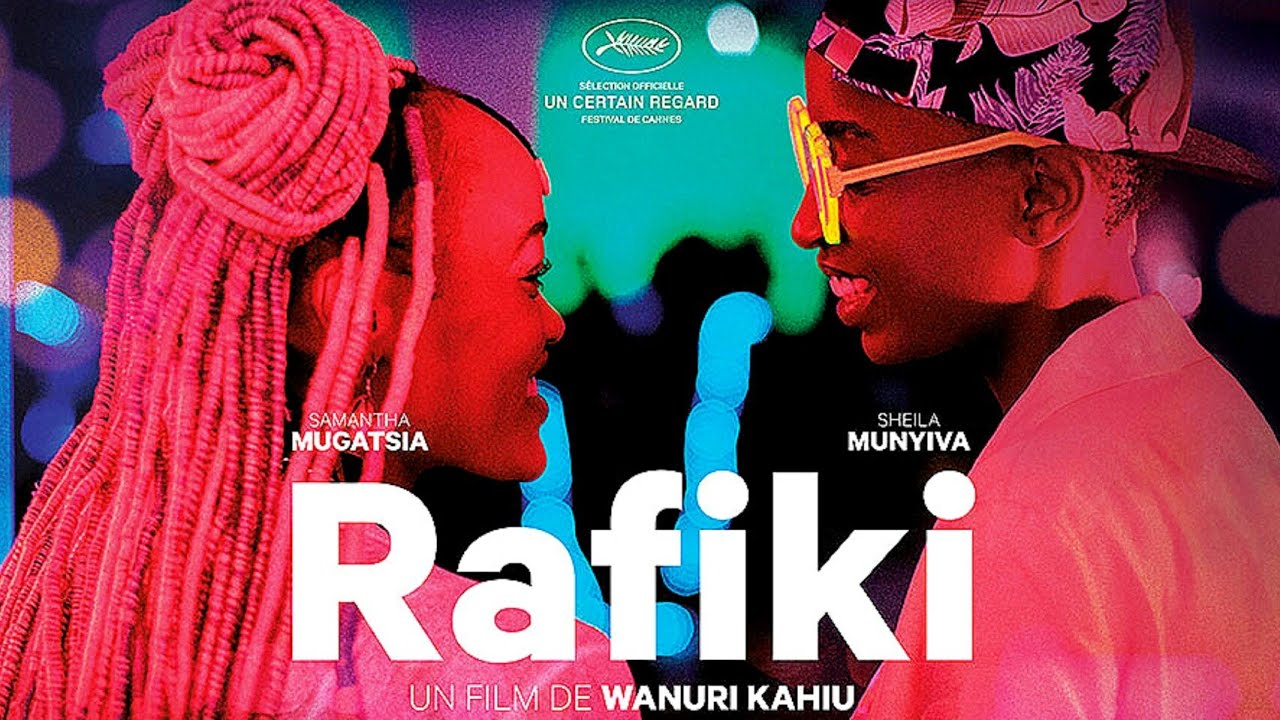
Blog 4: Rafiki (Kenya, 2018)

During the International Women’s Week, on March 5th, I attended the screening of the film titled “Rafiki” in the auditorium. The key message I got from this movie is that homosexuality is still not accepted in many countries, such as Kenya. Indeed, in this movie, Kena and Ziki fall in love both being young women having parents that are rivals in the upcoming elections. Despite how they feel about each other, homosexuality is frowned upon by the conservative community that they live in. Kena and Ziki were aware of these realities and had to hide their love in the public. However, they are beaten up by the community when they are exposed as being homosexuals, which shows the cruelty as well as the closed-mindedness of the community. This film shows that the fight for LGBTQ+ rights is not over and that everybody has to continue to fight for equal rights between people of all sexualities. 

Some students reacted very emotionally even shedding tears while watching this movie as the two women who loved each other in the film had to hide their emotions to not be frowned upon by their community and because these women were hurt physically because of their sexual orientation, which is definitely hard to watch. Others were shocked by the fact that this inequality still happens today. 

This screening made me think differently as I was unaware of the extent to which some people are treated solely because of their sexual orientation. This is very alarming as I believe that people should be treated equally no matter their sexual orientation. The community completely rejected Kena and Ziki and believed they were possessed by demons for being themselves. They were beaten up to the point that they were bleeding and even Kena’s own mother, as well as Ziki’s parents, rejected them. This made me think that we have to continue to fight for LBGTQ+ rights in order for people to be treated equally no matter their sexuality. 

Additional information that I can add to my review would be the fact that this film was nominated as the best foreign-language film at the Oscar Awards. However, it was later removed from its nomination as Kenya officials banned the film for promoting lesbianism. This information shows that still today some officials are homophobic and that people have to continue to fight for equality for people in the LBGTQ+ community. Even in big award shows, there is inequality based on one’s sexual orientation.

I would recommend this film to my friends as it is a beautiful film that shows the love between Kena and Ziki. This film shows the reality of a conservative country, such as Kenya. In addition, it is a movie from African cinema, This allows people to explore movies from a different region as many people, nowadays, only watch very popular movies from Hollywood. This movie opens the mind of its viewers making them think about the society we live in today. In my opinion, this is a must-watch movie for everybody.

Blog 4: International Women’s Week

During International Women’s Week, I attended the screening of Rafiki movie. This film is about two young women, Kena and Ziki, who identify as homosexuals, in Kenya. These two women have an intimate relationship together. Their fathers are political rivals which creates tension and pressure on the two women. They are both pressured by the homophobic views of their society, and to take their father’s political party. Throughout the movie, Kena and Ziki are victims of prejudice, and they are verbally and physically abused because of their sexual orientation. They are separated later in the movie. It is only after a few years that they reunite, and that they can finally be together.

I think that the main message of this film is that these young women show the importance of embracing one’s sexual orientation no matter the political rules, views, and pressure the families, friends and society might have. For example, they did not stop seeing each other after the numerous abuses, and problems they went through. Expect the time they were separated against their will that they were unable to fight for their love.

This film reminded me that we do not share the same freedom of expression compared to other countries. It pointed out and showed me how LBGTQ+ communities must hide, and how they get arrested for their sexual orientation in some countries. It demonstrates how in certain countries such as Canada and the United-States, we have the opportunity, most of the time, to be ourselves without experiencing discrimination, and frequent verbal and physical assaults. This film did not make me see these issues differently, however, it reminded me of the difficulties, and horrific acts people go through for the things we take for granted. This representation of a homosexual’s life in Kenya was very controversial for the Kenyan government because homosexuality is illegal in Kenya. Sadly, the movie was banned from the Kenya Film Classification Board. It also demonstrates the main message of the movie through discriminative acts that the film faced.

I would recommend this movie for its relatable message such as the topic of young love and how it shows that across the world we go through the same emotions, and relationships regardless of the gender of the love. I also love that people of color could express their own stories and experiences based on their one creative freedom and views. By interview some people at the screening, they shared to me these thoughts which I found very interesting and accurate.

https://en.wikipedia.org/wiki/Rafiki

Blog 4: International Women Week

Image result for rafiki movie

For Women International Week I went to see a movie called Rafiki. This movie talks about the life of two girls named Ziki and Kena who live in the country of Kenya. Both of their families are politicians and are fighting against each other. After meeting a couple of times, Ziki and Kena started loving each other despite their families being rivals. Kenya is a country that strictly prohibits homosexuality and now they both have to remain quiet about their feelings and make sure to not revealing to the public. In addition, it was nominated for the best foreign language film at 91st Academy Awards, however, it was later removed because the Kenyan authorities banned this film for promoting homosexuality, which is against the law.  Furthermore, the key message I got from this screening was that love does not depend on your gender. Love is non-binary which means that it is not restricted to femininity and masculinity. Moreover, the director and writer of Rafiki, Wanuri Kahiu is against any labels. In a Ted Talk, she said, “I am a filmmaker, not Black African filmmaker, I am only a filmmaker”. She is a feminist, so she wants equality between men and women and this film portrayed her views on what she believes is the right thing to do.

The screening of this movie did not make me think differently about LGBTQ+ rights. Before watching the film, I was already aware that we already need to have equal rights both politically and socially. However, when I watched the movie what made me think differently is that for some societies it is more difficult to have these rights be implemented. For instance, in the movie, there was a clear representation of the role of religion in Kenya. The church is important for the Kenyan population and the is the factor that prevents people to change their minds about the LGBTQ+ society. For western societies is difficult as well, but religious factors are no longer involved politically.

After watching the film, I interviewed some students about how they felt about the movie. All the students that I interviewed really liked the movie. They said that it had a great storyline and did not know that this film even existed and that they are more open to watching foreign movies. I asked the students “what do you think about the movie”? One student said that it really represented how the LGBTQ+ community feels in society.  She told me that at first, her parents were not supportive of her being lesbian and that she related to the character Ziki. The parents of the character were angry and disappointed at her when her relationship with Kena was revealed. They even slapped her in the face. In addition, another student said that we need to promote equal rights in other parts of the world and show them how it is beneficial for society. He told me that he does not know that Kenya was that strict on homosexuality.

In conclusion, I would recommend watching Rafiki to my friends. I feel that most people are used to watch commercial movies and do not give enough credit to international movies. This movie had a great love story and a message that could be applied to everyone around the world which will change the perspective of other individuals on the idea of the LGBTQ+ community. This screening enables people to have empathy for the characters. I could feel the emotions of Kena and Ziki even though I am not part of the LGBTQ+ community. Overall, this, in my opinion, this movie could have won the Acadamy Award for the Best Foreign Language Movie.

Slav and Kanata

For the international women’s week at Vanier, I attended the Slav and Kanata event. The main goal of this presentation was to denounce Robert Lepage’s culture appropriation. The event was presented by two speakers : a black and native american woman. The native american woman had meeting with Robert Lepage in order to understand his culture appropriation toward indigenous people. In fact, Robert Lepage directed a play few years ago about indigenous culture, and the woman was upset at him because first of all the play did not represent indigenous culture well – the quality of the costumes looked so “cheap”, but the main reason of why she criticized the play was because none of the comedians were indigenous people, so it did not represent their culture well. During the meeting, she asked him that next time he should hire native american actors and Robert Lepage said he wasn’t interested. The other woman also had a meeting with Mr. Lepage because he directed another play but this time about slavery, she criticized his work because she didn’t like how Robert portrayed black people. The main purpose of this presentation was speak out about the fact that white people have a lot of privileges and it is quite difficult to be a minority because will see you as “inferior” and they won’t take you seriously.

I really enjoyed the presentation because the two speakers are both minorities and it was interesting to learn about their past experiences. I also loved the fact that those two women were willing to do their best to defend their nation and culture. During this presentation, I learned that if there’s something that you dislike, you have too stood up and defend your beliefs and values. I come from a middle eastern background and when I was younger, I received a lot of racial comments because of how I looked – the colour of my skin, and these two women inspired me to not being afraid of defending my people.

I enjoyed the talk, the audience seemed so interested as well. A lot of students were asking questions. I learned to not being afraid of defending your culture and nation. If I could attend this event another time I would because a lot of issues were brought to the talk such as ; racism, cultural appropriation, propaganda, and etc.

Blog 4: International Women’s Week

For International Women’s Week, I went to the lecture called “Sex, Lies, and Evolution”. The purpose of the speech was to debunk some of the arguments used against feminism based on supposed “human nature”. In other words, the speaker wanted to explain any stereotypes that people used when explaining why the gender roles are the way they are. One misconception that we’ve been taught to believe is true would be that all human societies since the beginning of time have been dominated by men. Another misconception that is more commonly known, is that men have led all the major cultural advances, such as hunting tools, and making the creation of fire.

I liked this speaker because he didn’t just assume we knew everything about this topic. He didn’t assume that we took an anthropology course before, which was perfect for myself because I never did! He described anthropology as “the scientific field that studies humans, past and present, as biological and cultural beings”. I also learned what a meta-narrative was for the first time, because this term came into the lecture very often. A meta-narrative is a widely accepted story about why things are the way they are in the “grand scheme of things”. They’re composed of a multitude of unproven stories that appear factual.

A common portrayal of evolution is a picture of a man evolving. But why is this iconic picture of evolution solely based on men? (picture is shown below). My favorite meta-narrative story that he discussed was titled; Woman the Child Bearer. Women can’t hunt or make tools because they are busy reproducing and taking care of children. However, women performed importance subsistence tasks, with their kids!  So where did the “fact” that women had no purpose in the society come from?

This event was really well done, and I think he was able to portray it in a way that kept the listeners interested. I actually did learn a few things, and even some ideas of which I always believed to be true about the portrayal of men turned out to be completely false. I would definitely recommend this event to a friend, because he addressed a lot of stereotypes and false information that we have been tricked to believe for years.

Blog 4: Living as a “non-binary” person.

The event I attended revolved around the backlash attached to people who live outside the gender box. Four individuals gathered on a stage to freely talk about their personal experiences and share them with the wide public. This event featured individuals who are not a part of the binary genders that are featured in the world. Those four explained how they defined the “non-binary” term, how culture interacted with their gender identity, the responses they received from their families, their relations with the LGBTQ+ community and how they manage their lives publicly. The group composed of people that were born mostly during the 70-80s, but one was around the same age as the audience which was around 19 years and they came from very different countries which were a great addition.

The talk included some experiences that the four individuals lived throughout their lives and how difficult life has been because they considered themselves as non-binary. Some of them mentioned that most people labelled with gender but in reality, they just wanted to be known by who they are which was themselves, their name, not the constitution of their bodies or sexual orientation. Others stated that there were no such terms that defined non-binary individuals which made it very difficult back then to illustrate or define how they felt. One of them mentioned that their grandparents were very homophobic people; Even if they wanted everyone to know how they felt, they preferred not to tell their grandparents.

When we think of difficulties non-binary people receive, we think of the way they are referred to as, or how society treats them as alien, from the experiences that the 4 individuals received, we can understand that it is because many think that male and female are the only “normal” genders that the people who do not correspond to these suffer. Overall, it was very interesting to listen to such unique but believable stories. The difficulties these individuals faced were terrible and shows how such people are still treated in today’s society. I have spoken to many in the audience and they have all enjoyed listening to the experiences the four shared with us because we were able to understand better how it is to live in a world being “non-binary”. I would strongly suggest attending such talks because you will be able to meet people that have actually been through those stages of life or maybe still are, but their experiences are something everyone can learn from.

Blog 4 (Part II): International Women’s Week

The event that I attended for the international Women’s week was the “Sex, Lies, and Evolution: Debunking the “Human Nature” by Jacky Vallée. Who is a teacher at Vanier college in anthropology.  The talk was focused on the misconceptions of men and women evolution and their “respective” roles. Vallée used the anthropological perspective to explain that these gender roles are created by society and aren’t based on human nature. It is not written in our genes that men are more dominant or powerful than women, for instance. He explains that these are “just so” stories that are based on a culture humans have created for themselves over the years.

Vallé, explained the backlash feminists are receiving for wanting the termination of gender roles and the claims for human nature. He explained the misconceptions that we have when it comes to gender roles. For instance, back in the olden days, men were portrayed as the ones who were hunting for food, creating the tools, making fire, etc. While, women would be portrayed as cleaning their caves, taking care of the children or doing lightwork such as picking berries and fruits. Which is in fact a misconception. Through the anthropological way of thinking, Vallé, tried to debunk these ideologies through stories and making his listeners understand that men aren’t in fact the more dominant ones, they are just portrayed as so.

Unfortunately, we still live in a “men dominating” society. For instance, gender roles are still present nowadays. Vallé, asked his audience to raise their hands if their mothers are still the ones doing the chores, cleaning and cooking food for the family and almost everyone raised their hands. He also gave the example of the human evolution picture that goes from an ape to a man. Which makes you realize how imprinted this ideology where men are “more superior” to women is, even to this day. Image result for human evolution

Some of my friends who have attended the conference with me all had the same response afterwards. We all agreed that we have learnt that gender roles aren’t biological but all made up by society. Which definitely makes me think about gender roles differently.  This event made me realize certain things I haven’t necessarily thought about before (which is also sad how were so used to living in a society like this) for instance, the underrepresentation of women in photographs (like the human evolution). Which makes it seem like the men has been the one conducting the human evolution by creating new tools, coming up with new ideas, rational thinking, etc. And that is not necessarily factual. Moreover, this is an event I would recommend to others since it makes you think out of the box. Making you question things about human evolution, culture, society, etc. That we wouldn’t necessarily think about on a normal day basis, because of such strong influences that have built our community. Jacky Vallé, did a great job at explaining these misconceptions we have about gender by introducing us to an anthropological way of thinking.


4.5 International Women’s Week

This week I attended a presentation called  (Re)imagining Gender and Sexuality in the Healthcare Field Through Ancestral Inquiry. it was held in the Auditorium from 8:30 a.m. to 9:45 a.m. and presented by Emil Briones,  a 30 year old Faculty Lecturer in the Doctor of Dental Medicine Program at McGill University where he holds classes about social justice, health and social inequality. In the beginning of the presentation, he talks about how many of his students, especially those who are older and come from a generation with very traditional backgrounds, have difficulty grasping the fact that there are other ways of expressing ones gender since they mainly turn to scientific knowledge and biological facts to determine whether an individual is male or female. In response the close mindedness of his students, he encourages them to question the idea that there is only one way to understand where we stand when it comes to sexuality and gender. His main goal when teaching is to change peoples point of views on the subject of sexuality and “plant the seed” in order for those who have very restricted beliefs to at least think about topics such as racism and gender in a more open manner. Throughout the presentation he stresses the importance of understanding out personal cultural background saying things like “Know who you are. Know your ancestral roots.” as a way of encouraging the audience to gain more knowledge about their culture. He even includes personal storytelling and life experiences that led him the discovery of the Babaylan which are a class of spiritual healers in the Philippines.

After talking to other students, I can safely say that they responded well to the lecture because of how dynamic it was despite the fact that it was an early morning presentation. Not only that but they agreed with many of the issues brought up. For instance, many of the nursing students agreed that in order to understand the needs of patients, you need to know their cultural background. They really related to that statement since in the medical field, they are the workers who build the best patient contact due to the fact that they have the most opportunity to get to know the patients they care for as opposed to doctors and physicians who aren’t exposed to people to people contact as much.

This presentation made me understand the relation of gender and culture to medicine and how it’s necessary for medical practitioners to be knowledgeable of their patients background in order to make better and more accurate diagnosis’. Beforehand, I wasn’t aware that other cultural backgrounds needed to be taken into account when finding better solutions to the patient’s problems. It also, encouraged me to gain more knowledge on my cultural background. I do not know much about my ancestry but this presentation peaked my curiosity in finding our more about it because I do agree with Emil’s statement that it could contribute to the understanding of myself in more depth.

What I know about Emil is that he is a lecturer at Mc Gill University and that he also works as a conflict mediator. He is half filipin and that his grandfather was supposedly a substance farmer and a witch doctor that would cast out evil spirits from peoples bodies. His teaching methods consist of group discussions in order to help others learn from one another. His classes have a pass fail grading system because it encourages less competitiveness between medical students who are generally extremely competitive. Other than that, I also know that he feels privileged to be able to use his platform as a means to reach younger generations and help them open their minds to gender and sexuality.

Finally, I can say that I recommend this event to my friends because it was dynamic and interesting. It touched on subjects I wasn’t aware of like 2 spirited people and people who identify as gender non-binary. The lecturer is also very open to questions and would even answer ones that are very personal to him which is not something many people are willing to do.

Blog 5: Sex Work & The Colonial State

On March 6th, in the Vanier auditorium, Jenn Clamen & Marlène from Stella, l’aime de Maimie gave a presentation that shone the spotlight on patriarchal and systemic oppression against sex workers and how it is misplaced, inappropriate and, I concur, just downright right unnecessary.

Marlène began by giving an in-depth description of Stella, the organization and all about the important work they do and the challenges they face with unwanted intervention and stigma that plagues sex work and sex workers here in Montreal. She made it very clear that all of the representatives of Stella were, or are sex workers themselves and so have that valuable experience and knowledge of the industry to advocate for the rights and needs of Montreal’s sex workers. They offer a lot of services and resources to those who need it, and even deploy “street crews” who will go out and supply sex workers with “crack packs”, condoms and medical assistance to help limit the many dangerous risks involved with sex work. The list of services they offer is incredibly but in short they look out for themselves in a way the government resists to.

Stella marches, they print and distribute newsletters and editorials informing the public about current issues, notifications and events that supports and advocates for the rights of sex workers. Migrant sex workers are specifically at risk as they can be deported if charged with sex work crimes. And because sex work isn’t a recognized source of income, sex workers have a difficult time finding “legitimate” employment, housing and other types of benefits. They are often criminalized and more likely to be approached or harassed by law enforcement officers.

The stigma that follows sex workers is despicable and incredibly closed minded. To quote one of the presenters “Sex work itself, isn’t dangerous – the environment of sex work is dangerous.” The state needs to make more of an effort to create safer working conditions for all people, including those who choose to have sex in exchange for money. Autonomy is important to retain and stripping sex workers of theirs is unfair and unjust.